Lab Team
Good general practice for receiving, storing and working with freeze-dried peptide reagents on the bench.
Lyophilised (freeze-dried) reagents are supplied as a stable powder specifically so they can travel and sit on a shelf without degrading. How a lab receives and handles that powder in the first few minutes and weeks often matters more than anything printed on the label.
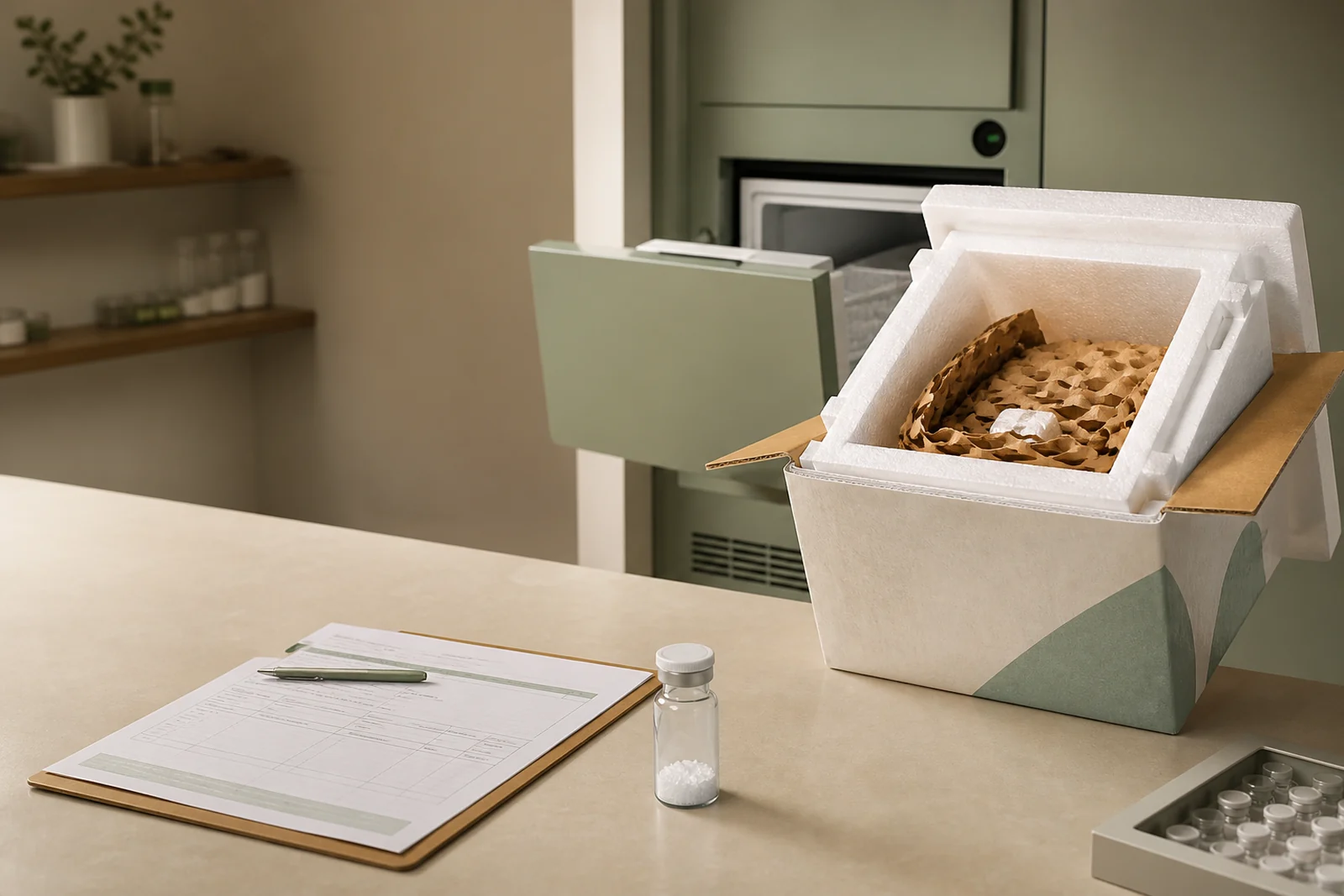
On receipt
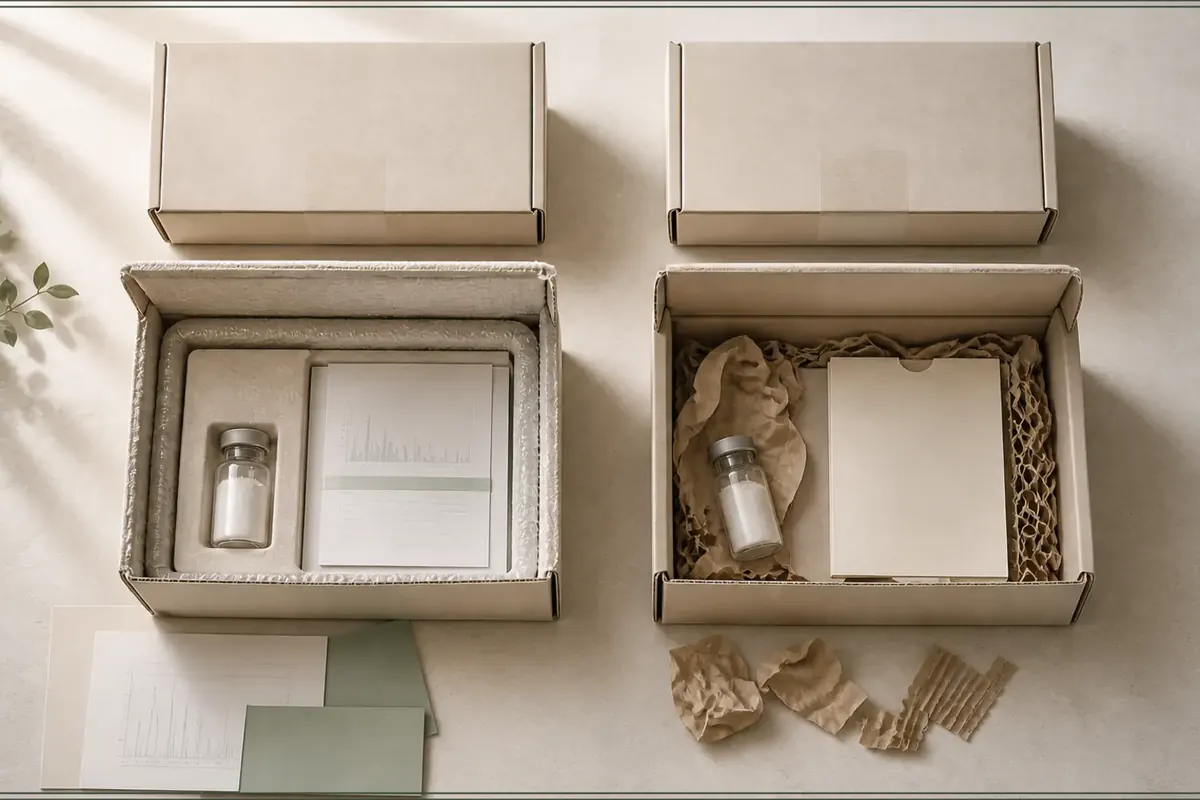
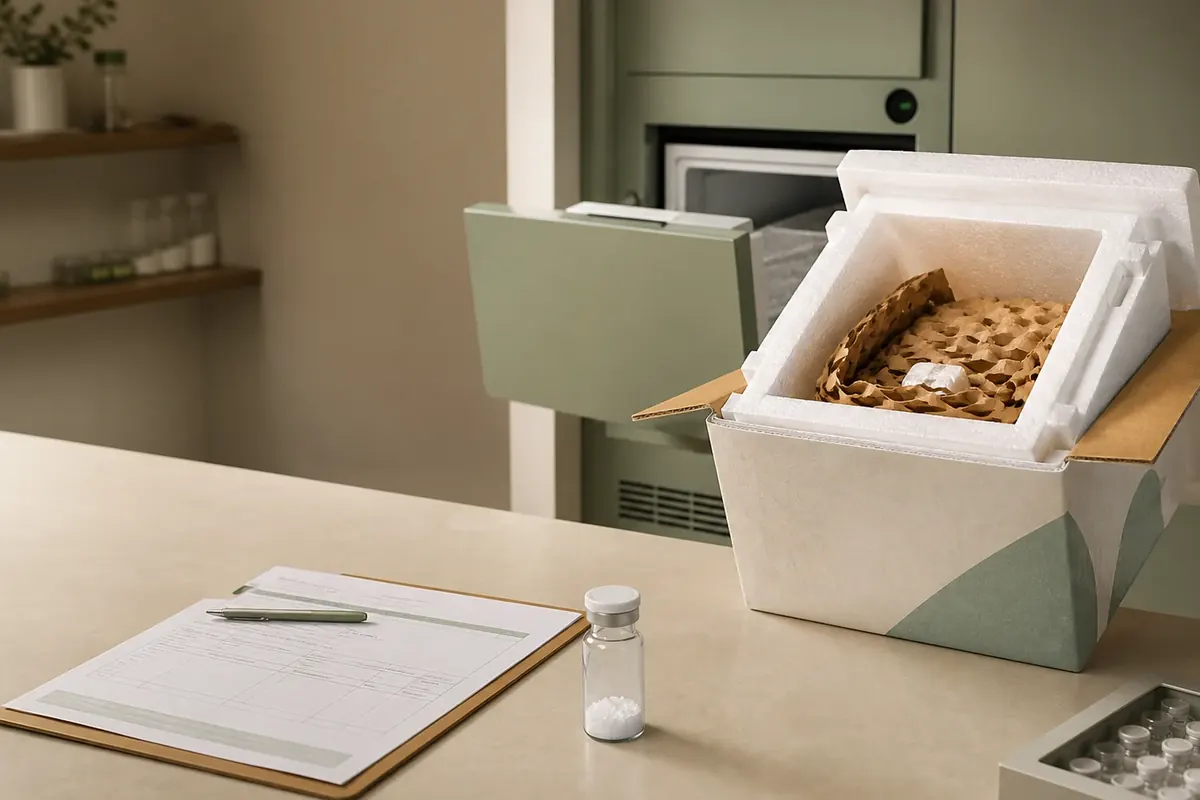
Check the vial for damage, log the lot number against your inventory system, and move it to the storage condition specified by the supplier before doing anything else.
Why powder is the stable state
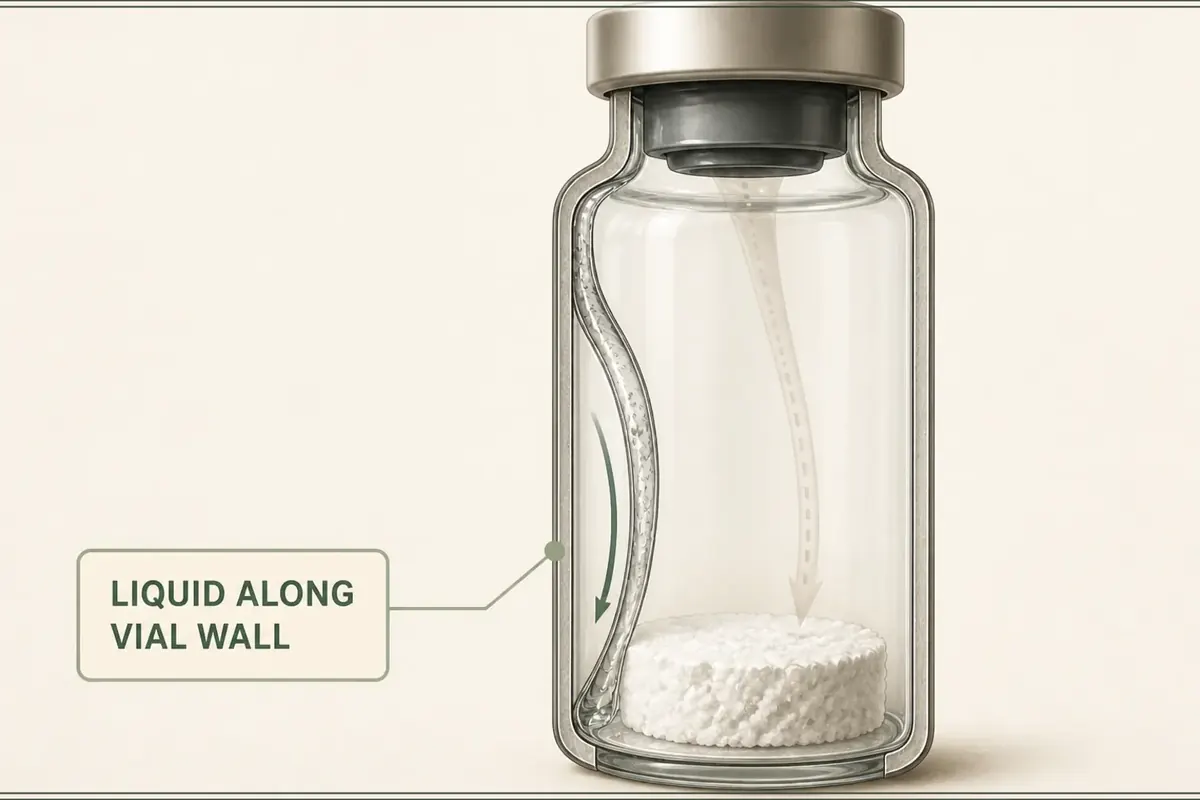
Removing water from a compound removes the medium in which most degradation reactions happen. That is the entire rationale for lyophilisation, and it is why a sealed, dry vial is far more forgiving of ordinary handling than any solution made from it.
Good bench habits
Keep vials in their original container away from direct light, minimise how often a cold-stored vial is brought out to room temperature, and record what was done to each vial and when. None of this is exotic — it is the same discipline any lab already applies to other sensitive reagents.
This note describes general handling practice for laboratory reagents. It is not instructions for administration to humans or animals, and it is not medical advice.
For research use only — not for human consumption. Nothing here is medical advice.