Lab Team
Retatrutide is not sold in pharmacies anywhere. That makes supplier evidence the only thing separating real material from a bad purchase. Here is the checklist.
Retatrutide cannot be bought from a pharmacy in the United Kingdom, the European Union or the United States, because it holds no marketing authorisation in any of those territories. Every supplier offering it is therefore a research chemical supplier, and that single fact changes the question you should be asking. The useful question is not where to buy retatrutide. It is what a supplier is willing to show you before you hand over money.
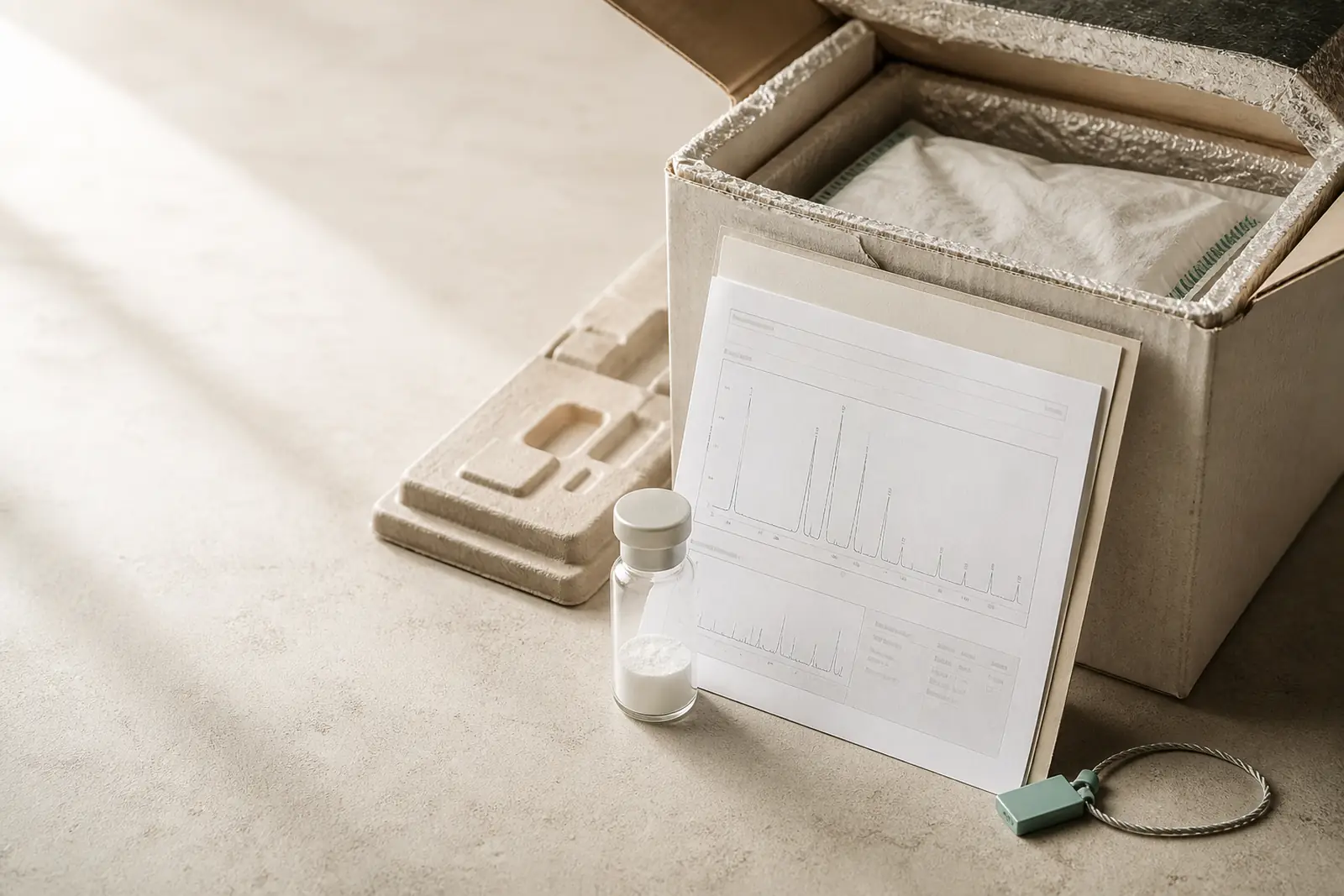
Why is there no pharmacy route for retatrutide?
Retatrutide is an investigational compound. Its phase 3 clinical programme is still running, and no regulator has yet assessed it for marketing authorisation. Licensed medicines reach pharmacy shelves only after that assessment concludes, which is why you will not find retatrutide alongside licensed products.
The practical consequence matters more than the regulatory detail. In a licensed supply chain, verification is done for you: the manufacturer is inspected, the product is batch-released, and a pharmacist stands between you and a defective unit. In a research supply chain, none of that exists. Nobody has checked the material on your behalf.
This is also why supplier comparison behaves so strangely in this market. With licensed medicines, the product is a constant and suppliers compete on price and convenience, because the thing in the box has already been guaranteed by someone else. With research compounds the thing in the box is the variable. Two vials sold under the same name, at similar prices, from sites that look equally professional, can differ in purity, in identity, and in whether they were ever tested at all. The supplier's own documentation is the only evidence in the room, which means the quality of that documentation is not a detail of the purchase. It is the purchase.

Is it legal to buy retatrutide in the UK?
Buying and supplying retatrutide as a research reagent is lawful in the United Kingdom. The restriction that people are usually thinking of attaches to how a product is presented and what it is supplied for, not to the molecule itself.
Under the Human Medicines Regulations 2012, a product becomes a medicinal product by presentation when it is offered with claims of treating or preventing disease, or by function when it is supplied for administration to people. A compound sold and labelled strictly for laboratory research, with no therapeutic claim attached and no guidance on human use, is not being placed on the market as a medicine. That is the distinction the entire research-supply model rests on, and it is also why a supplier who starts offering protocols or outcome claims has moved themselves into a different regulatory category — and taken their customers with them.
What this does not settle is anything about a specific transaction. Personal import, onward supply and the position in other jurisdictions are separate questions with separate answers, and none of the above is legal advice. It explains why the research market exists in the form it does. It does not tell you that any particular purchase is compliant.
What should a supplier show you before you pay?
Five things, and the absence of any one of them is informative.
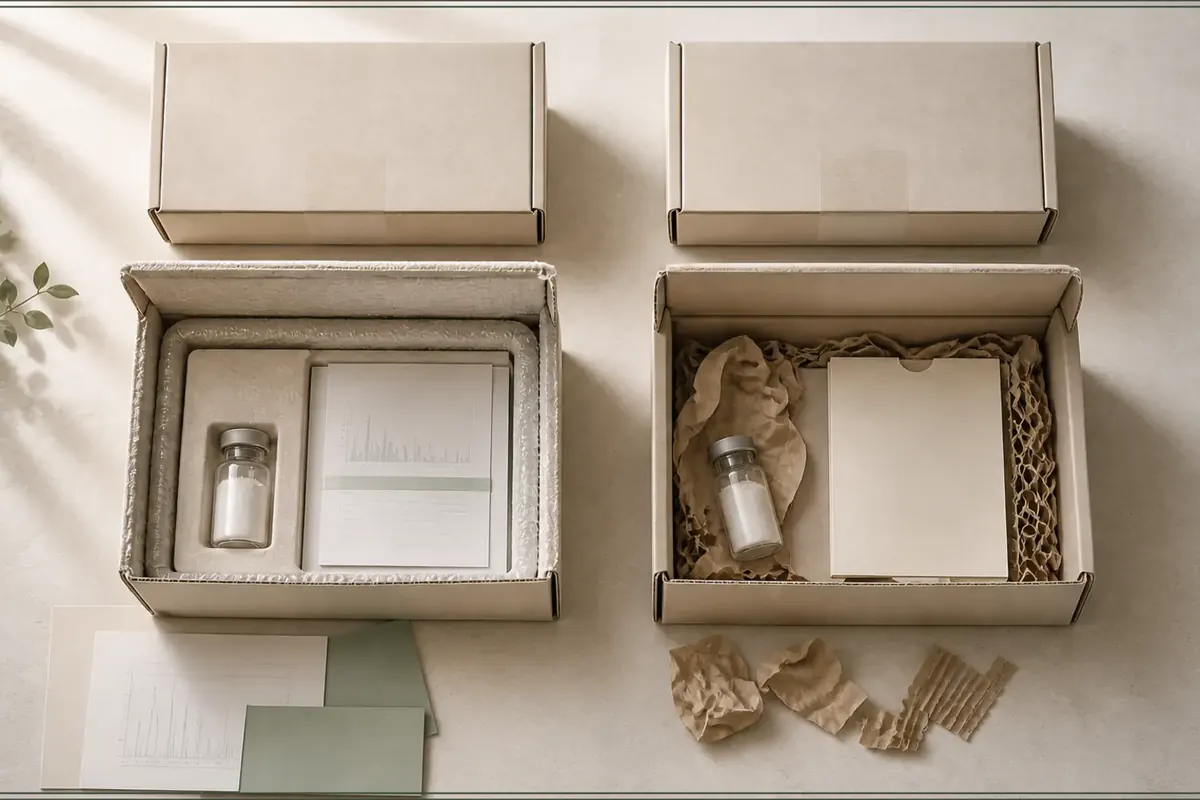
**A per-lot certificate of analysis.** Not a generic PDF for the product line, but a document tied to a specific lot number that matches the label on the vial you receive. A COA that cannot be traced to your particular vial is a marketing asset, not evidence, and keeping that paperwork tied to the lot you received is what makes it useful months later.
**The chromatogram, not just the number.** Any supplier can print "99% purity" on a page. An HPLC chromatogram shows the actual trace, including the smaller peaks beside the main one. Publishing the image invites scrutiny that a printed percentage avoids.
**Mass spectrometry identity confirmation.** Purity is a proportion; identity is a name, and a document that reports one is not reporting the other. A vial can be 99% a single compound and still be 99% of something nobody ordered. Mass spectrometry is what closes that gap, and a supplier who publishes purity figures without it has answered the easier question.
**A named entity with a real address.** A company registration number and a physical address in a jurisdiction with consumer protection creates accountability that an anonymous storefront cannot.
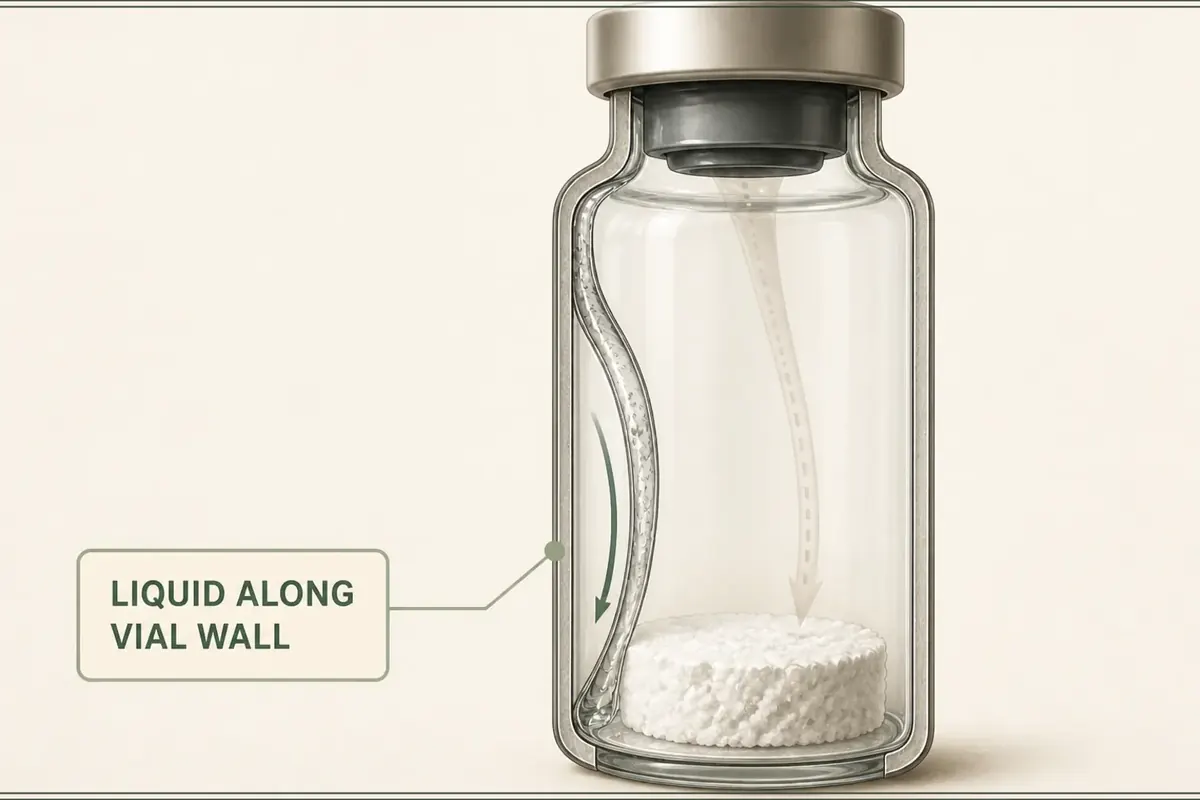
**Cold-chain handling stated in advance.** Peptides degrade with heat and with repeated freeze-thaw cycles. A supplier who describes their shipping conditions before you buy is making a commitment. One who explains them only after a complaint is improvising.

Why is the cheapest listing usually the weakest one?
Third-party analytical testing costs money, and it costs money per lot rather than once. A supplier who tests every batch carries a recurring expense that a supplier who tests nothing simply does not have. That difference has to appear somewhere, and it appears in the price.
This is why comparing retatrutide suppliers on price alone reliably selects for the least evidence. A listing that undercuts everything around it is usually the one with no per-lot documentation behind it, because the absence of testing is precisely what funds the discount. Reading price as a signal of testing rather than a signal of value inverts the usual instinct, and it is the more useful reading here.
The inversion has a limit worth stating, because it cuts against us. A high price does not demonstrate that testing happened either. Nothing stops a supplier charging a premium and publishing nothing, and some do exactly that. Price and evidence are correlated at the bottom of the market and almost uncorrelated at the top. What follows is narrower than "buy the expensive one": an unusually cheap listing is strong evidence of absent testing, while an expensive listing is evidence of nothing at all until the documentation appears. Understanding how the material should be handled once it arrives makes the same point from the other direction: careful handling is worthless if the contents were never verified.
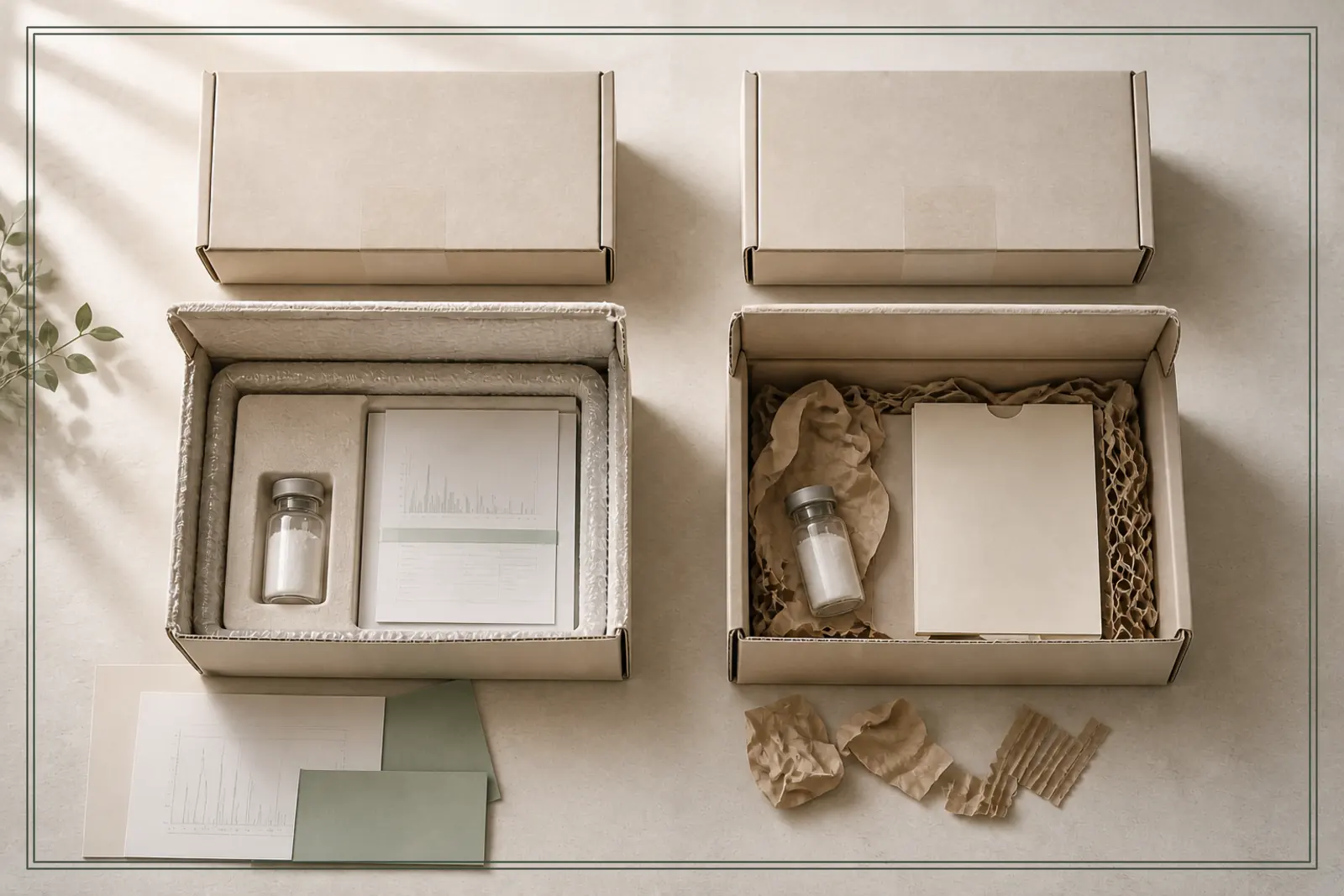
How do you check that a certificate of analysis is genuine?
Four cross-checks catch most of what goes wrong, and all four can be done in a couple of minutes with the document in front of you.
Match the lot number on the certificate to the lot number physically printed on the vial. A certificate that names a lot you were not sent is a certificate for someone else's material. Check the analysis date against the production date: a document dated before the lot existed has been reused from an earlier batch. Read the compound name on the analysis rather than the name on the listing, because a recycled certificate often still carries the identity of whatever was tested originally. Then find out who ran the work — a named third-party laboratory is something you can look up and contact, whereas "tested in-house" is a claim that closes the loop back to the person selling you the vial.
None of this proves a document is authentic. A determined supplier can fabricate a certificate outright, and these checks would not catch it. What they catch is the lazy failure — the reused, mismatched, undated or unattributed document — and in practice that is what most bad paperwork actually is.
What does this checklist not tell you?
It does not establish that any given batch is what it claims to be. Documentation can be fabricated, and a checklist that a supplier knows about is a checklist a dishonest supplier can perform. Independent verification of a specific vial in your possession would require your own analytical testing, which is not practical for most buyers.
What the checklist does is shift the odds and narrow the field. A supplier who publishes per-lot chromatograms and mass-spec identity data has accepted a standard they can be held to, and has spent money to do it. That is not proof, and we will not present it as proof. It is the strongest available signal in a market that offers no certainty, and treating it as the deciding factor is a considerably better strategy than choosing on price.
It is worth being clear about what the residual risk actually is, because "no certainty" is easy to say and easy to skim past. Even with every document present and consistent, you are relying on the supplier's honesty about work you did not witness, on a batch you cannot test, analysed by a laboratory you did not commission. That chain has real links in it. The reason to prefer documented material anyway is not that the chain is unbreakable — it is that each published document is a specific, checkable claim that a dishonest supplier has to keep consistent, and volume of checkable claims is the only leverage a buyer in this market has.

Where our documentation sits against this list
We publish per-lot certificates of analysis with matching lot numbers, HPLC chromatograms rather than summary figures, and mass-spectrometry identity confirmation, and we state our cold-chain conditions before purchase rather than after. Those are the same five criteria we would apply to anyone else, and we would rather you used them on us than took our word for anything.
That includes the verification steps above. Our lot numbers are printed on the vial and repeated on the certificate, the analysis dates sit after the production dates, and the laboratory that ran the work is named rather than described. If any of those fails to line up on an order you receive from us, that is a defect worth raising with us directly, and we would rather hear about it than have you quietly conclude the market is all the same. All material is supplied for laboratory research use only.
You can see how our retatrutide 20mg listing measures up, where the current lot documentation is linked directly from the page.
For research use only — not for human consumption. Nothing here is medical advice.