Lab Team
Reconstitution is where most research peptide material is damaged. The diluent, the pour, the swirl and the storage all matter. Here is the chemistry behind each.
Lyophilised peptide arrives as a dry cake at the base of a sealed vial, and it is remarkably durable in that state. The moment liquid is introduced, that changes completely. Reconstitution is the single point at which most research material is degraded, and almost all of the damage comes from four decisions made in under a minute.
What else do you need before you start?
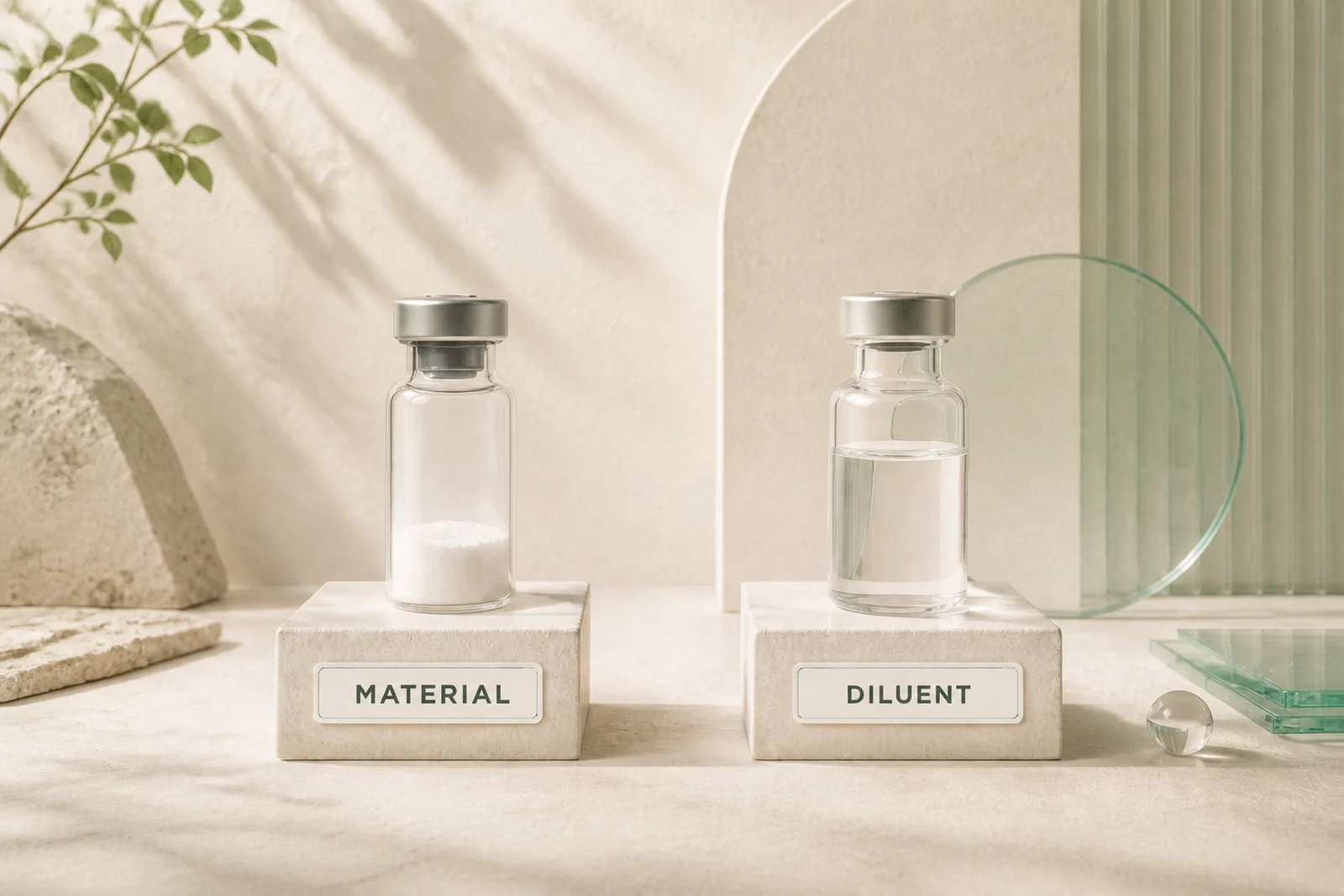
Four things beyond the vial, and running short on any of them mid-way is how a careful process turns into an improvised one.
A diluent, in enough quantity for the work rather than for the single vial in front of you. Volume gets lost to dead space in every transfer, and a small bottle bought for one vial routinely runs out across three. Calculating the total before ordering costs nothing; discovering the shortfall with an open vial costs material.
A measuring device whose graduations match the volumes being used. This is the constraint most often underestimated. If the smallest graduation is 0.1 ml and the calculated volume is 0.5 ml, the concentration carries that resolution as an error bar for the entire life of the solution — and no downstream care recovers the precision lost in that one pour.
Cold storage that is already at temperature, and that is not the shared fridge opened forty times a day. Temperature cycling does cumulative damage, so where the vial goes afterwards is a decision to make before it is opened, not after.
And a way to label what you have made. The manufacturer's label describes a dry mass. The moment liquid goes in, the concentration and the date exist nowhere except on whatever you write down.
Which diluent should be used, and why does it matter?
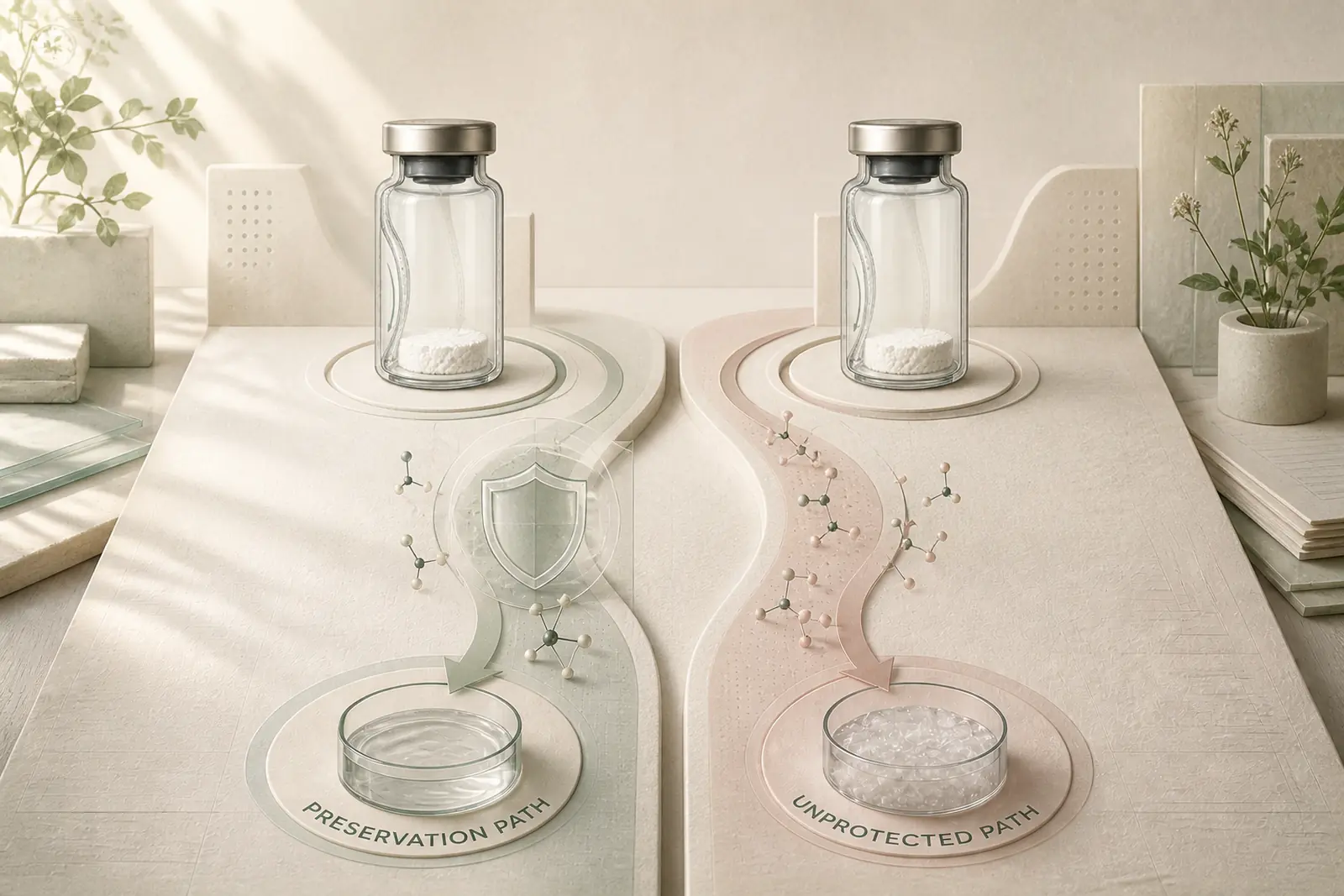
The choice is between sterile water and bacteriostatic water, and the difference is a single ingredient: bacteriostatic water contains roughly 0.9% benzyl alcohol as a preservative.
That preservative matters only if the vial will be accessed more than once. Sterile water contains nothing to inhibit microbial growth, so once the stopper has been pierced and the solution stored, it offers no protection against contamination introduced at that moment. Bacteriostatic water is formulated for multi-use containers precisely because repeated access is expected.
There is a second consideration that is less discussed. Benzyl alcohol can interact with certain peptides, and for a small number of sequences the preservative is not the neutral choice it appears to be. For most research peptides this is not an issue, but it is worth knowing that the default is a default rather than a universal rule.
The diluent is also a product in its own right, with its own lot number and its own expiry, and it is the component most often treated as inert background. A bottle that has been open on a shelf for months is a variable in the work whether or not anyone records it as one. Buying it fresh alongside the material, and checking the date on it with the same attention given to the vial, closes a gap that otherwise never gets noticed.
How should the liquid actually be added?
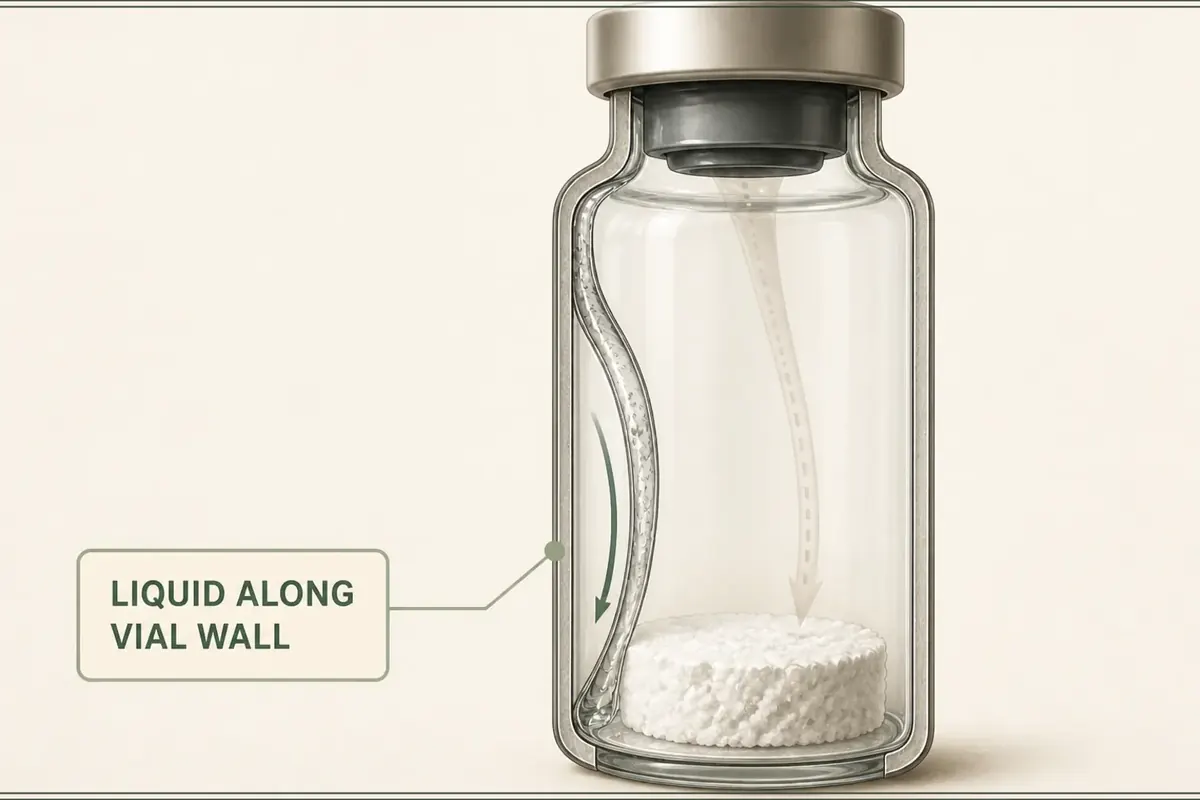
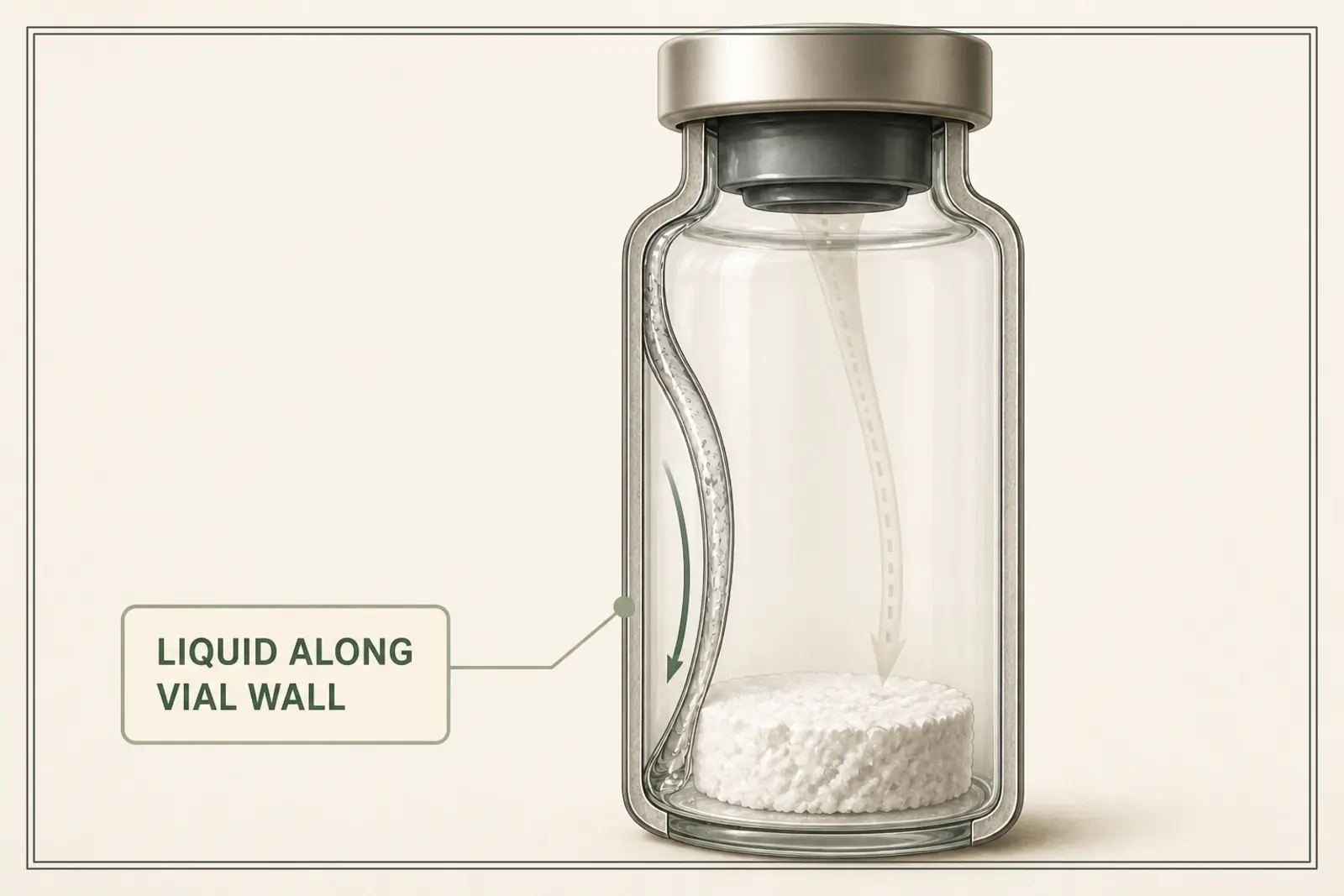
Down the wall of the vial, slowly, never directly onto the cake.
A stream of liquid striking the lyophilised cake directly delivers mechanical force to a fragile structure. Running it down the inside wall lets it pool at the base and dissolve the cake from beneath, which is gentler and produces fewer problems. Angling the vial makes this straightforward.
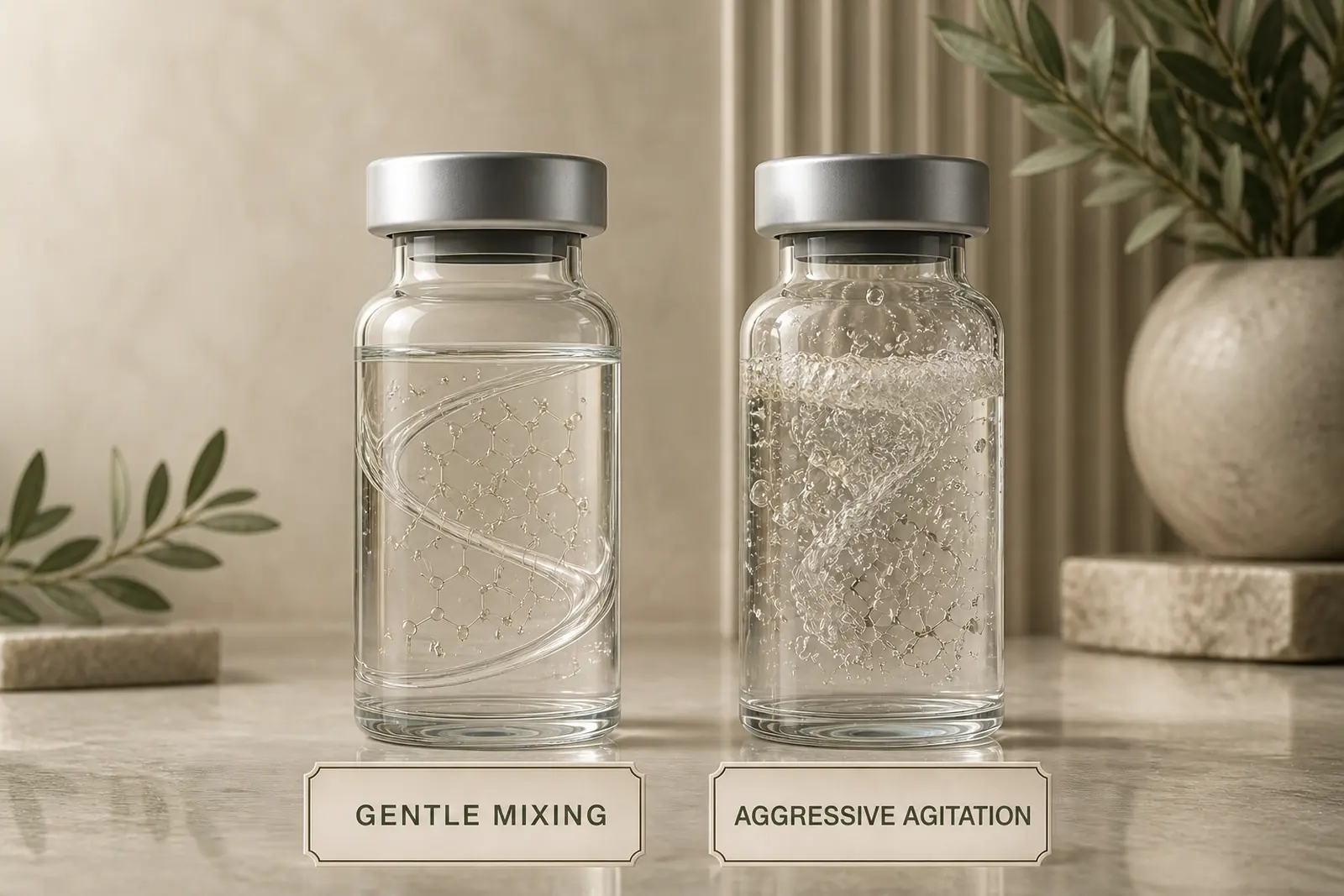
Then swirl. Do not shake. This instruction is repeated everywhere without explanation, and the explanation is the useful part: peptides denature at the air-liquid interface. Shaking generates enormous interfacial area in the form of bubbles, and every bubble is a surface at which peptide chains can unfold and aggregate. Foam is not cosmetic. It is the visible evidence that denaturation has occurred. A gentle swirl, repeated with patience over several minutes, dissolves the cake without generating that surface.
Continue until the cake has gone completely, and treat a cake that resists as information rather than an obstacle. Material that will not fully dissolve at the volume chosen is reporting that the target concentration sits at or beyond what the solution will hold at that temperature. The answer is more diluent or more time, never more agitation — forcing it with vigorous mixing produces the exact denaturation the slow method was avoiding.
How is reconstitution volume calculated?
It is arithmetic, and it is worth doing yourself rather than accepting a figure from anyone.
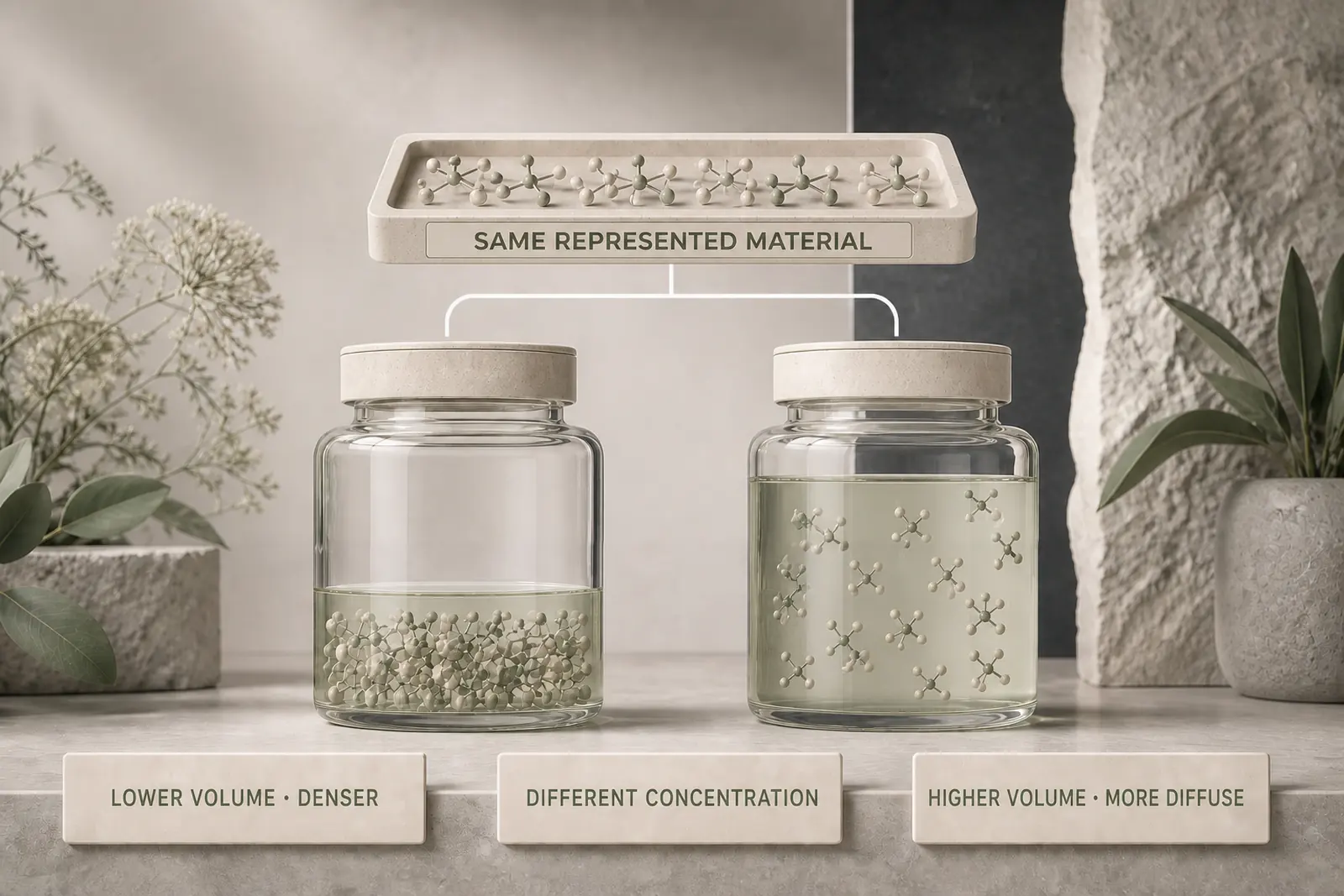
Concentration equals mass divided by volume. A vial containing 5 mg of peptide reconstituted with 2 ml of bacteriostatic water gives a solution at 2.5 mg per ml. The same 5 mg vial reconstituted with 1 ml gives 5 mg per ml. The vial contents are fixed; the volume chosen sets the concentration, and nothing else does.
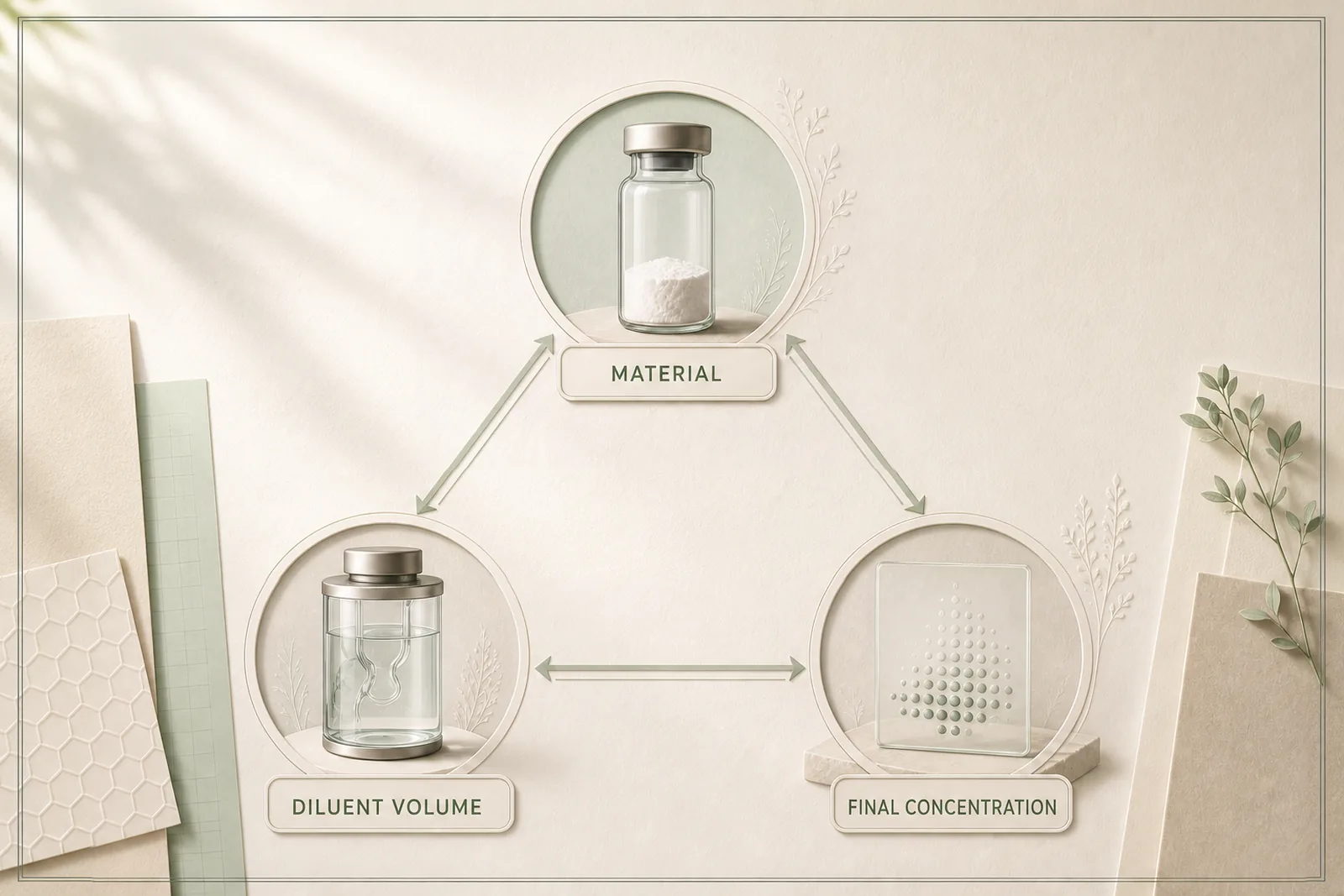
The practical trade-off is measurement resolution against solution stability. More diluent produces a lower concentration and larger, more easily measured volumes. Less diluent produces a more concentrated solution occupying less space. Both are legitimate, and the correct choice depends on the requirements of the work rather than on any universal figure.
We stop at the arithmetic deliberately. Retatrutide holds no marketing authorisation in any territory, no regulator has approved an administration schedule for it, and its phase 3 programme remains ongoing. We will not publish a protocol, because no published data establishes one and anyone presenting a schedule for an unapproved compound has invented it.
What changes once the peptide is in solution?
Everything about the storage clock.
Dry lyophilised powder held cold and sealed is stable over long periods, and temperature cycling rather than a single warm spell is what does the cumulative damage. Solution is a different material with a different lifespan, measured in weeks under refrigeration rather than months or years. Degradation begins immediately and proceeds continuously.
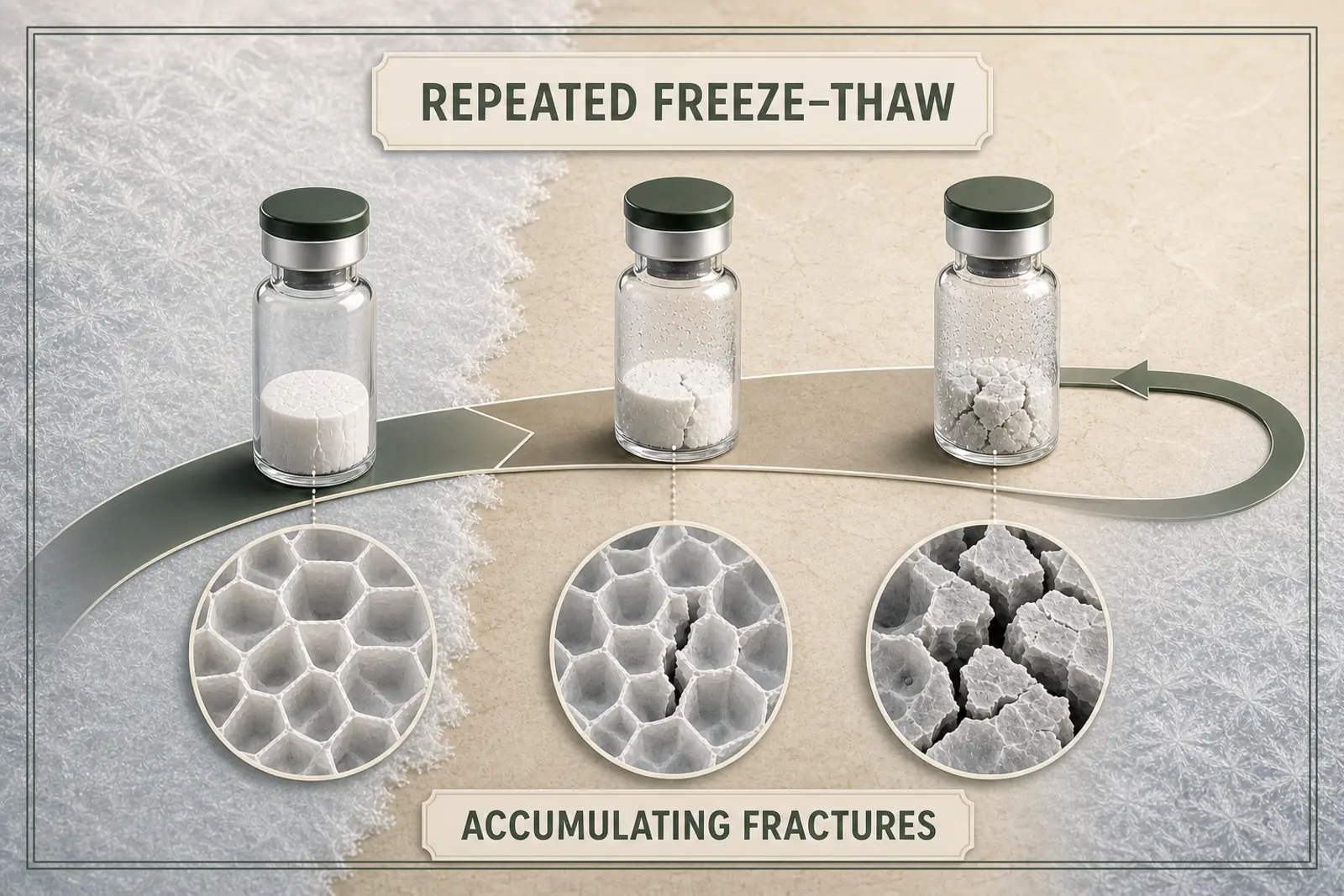
Freeze-thaw cycles deserve particular attention because they are cumulative rather than resettable, which is the same logic behind the general handling practice for freeze-dried reagents. Each cycle drives ice crystal formation and concentration gradients that stress peptide structure, and the damage from cycle three adds to the damage from cycles one and two. Freezing a solution does not return it to its original condition. It preserves whatever state it is currently in, minus the cost of the freezing itself.
One consequence of this is worth stating explicitly, because it catches people out: an expiry date printed on a dry vial describes the dry material and nothing else. It does not transfer to the solution made from it. From the moment liquid goes in, the only date that governs the material is the one written at reconstitution, and the manufacturer's date on the label has stopped applying.
Which mistakes waste the most material?
Ranked by what they actually cost, the expensive errors are not the ones that look dramatic.
Shaking rather than swirling is the most common and the hardest to see afterwards. The foam settles within minutes, the solution looks clear, and nothing about the finished vial reports the denaturation that occurred while it was foaming. The absence of visible evidence is exactly why the habit persists.
Opening the vial straight from cold storage is the mistake people do not know they are making. A chilled vial brought into a warm room and unsealed immediately collects condensation on the inside, which introduces an uncontrolled quantity of water onto a cake whose entire stability depends on being dry. Letting the sealed vial reach ambient temperature first removes the problem completely and costs only patience.
Guessing the volume rather than calculating it is irreversible in a way the other errors are not. Diluent can be added; it cannot be taken back out. Whatever concentration is set in that moment is the concentration for the rest of the solution's life, and every measurement made from it inherits the guess.
Repeated freeze-thaw is usually a decision that was never actually made. Material gets frozen and thawed several times because the storage format was chosen after reconstitution rather than before it. Deciding how the solution will be divided and stored while the vial is still sealed is what prevents the cycles, and the damage they do does not reverse.
The costliest mistake sits before all four, and no technique defends against it: reconstituting material that had already degraded in transit, or that was never what the label claimed. Careful handling protects good material. It cannot rescue bad material, and it cannot tell you which one you have.
Material worth handling carefully
Careful reconstitution technique protects material that was intact when it arrived. It cannot recover material that was already degraded in transit or was never what the label claimed, which is why handling and sourcing are two halves of the same question.
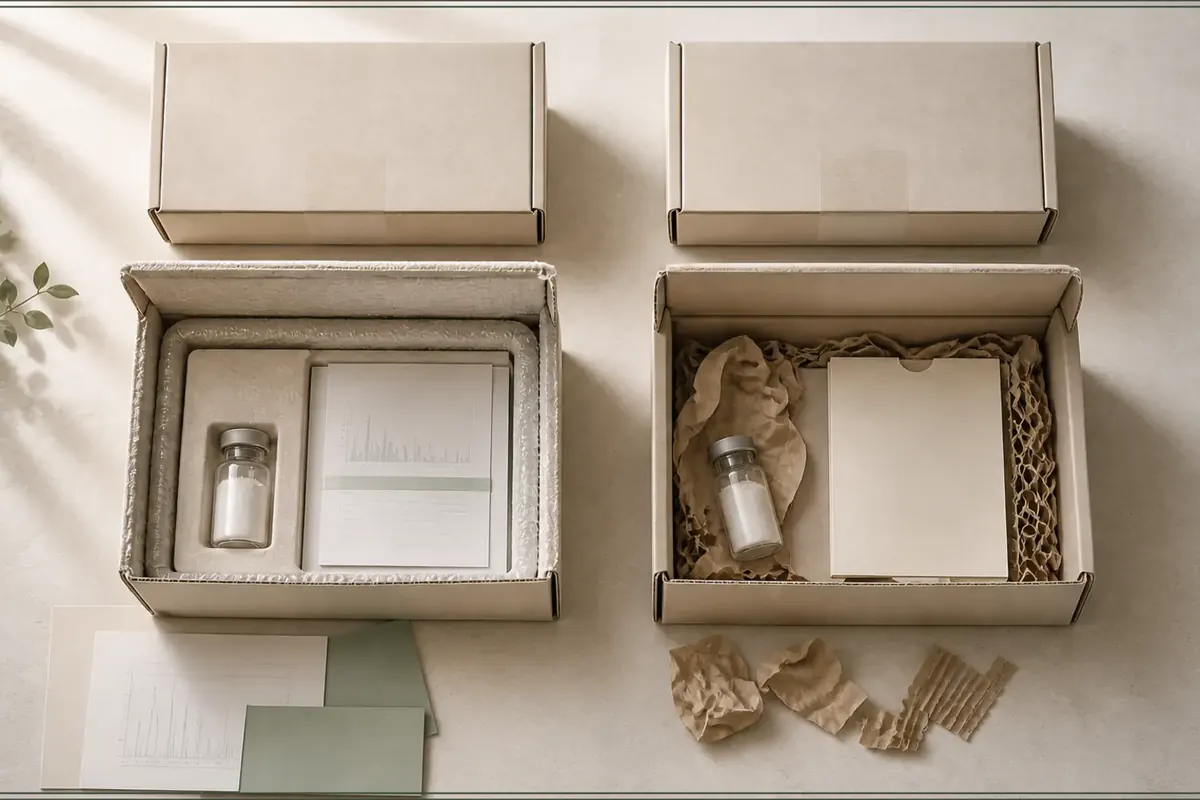
We ship under stated cold-chain conditions and publish per-lot certificates of analysis with matching lot numbers, HPLC purity and mass-spectrometry identity. You can see the retatrutide 20mg vial we supply, and bacteriostatic water is available as a checkout add-on so the diluent arrives with the material rather than a week behind it.
That add-on exists because of the shortfall described earlier in this article. Working out the total diluent requirement across every vial being ordered, and adding it at checkout, is the cheapest way to avoid the improvised version of this process. Before ordering at all it is worth reading what to check in a supplier's documentation, because the checks that matter happen before the vial arrives, not after it is open. Supplied for laboratory research use only.
For research use only — not for human consumption. Nothing here is medical advice.