Lab Team
NAD+ is a coenzyme present in every living cell, doing two very different jobs. Here is what it actually does, why levels fall with age, and where the evidence stops.
NAD+, or nicotinamide adenine dinucleotide, is a coenzyme found in every living cell, and it is not a recent discovery or a supplement industry invention. It was first identified in 1906 and has been central to biochemistry textbooks for a century. What is recent is the attention, and that attention has attached itself to a specific claim that deserves separating from the underlying science.
What does NAD+ actually do in a cell?
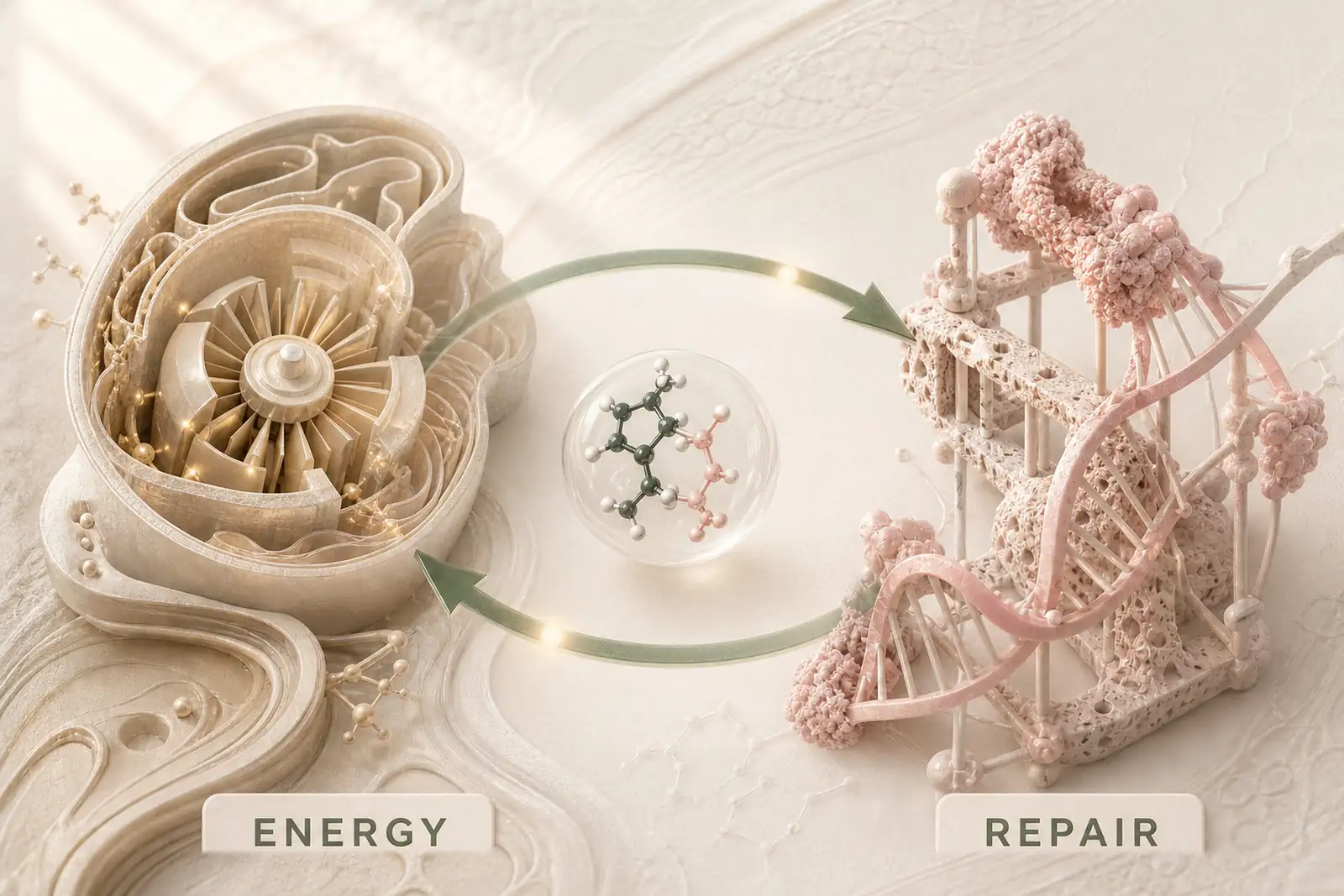
NAD+ does two jobs that are easy to confuse, and most confusion about NAD+ comes from collapsing them into one.
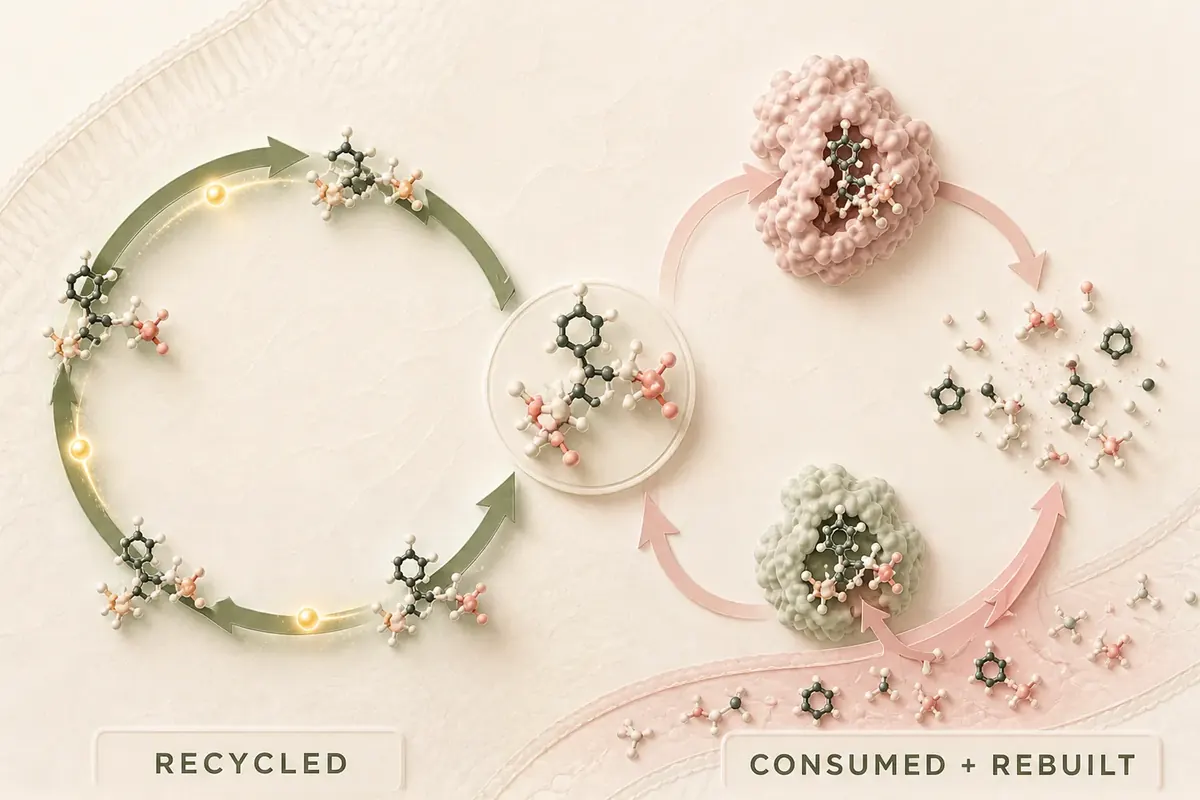
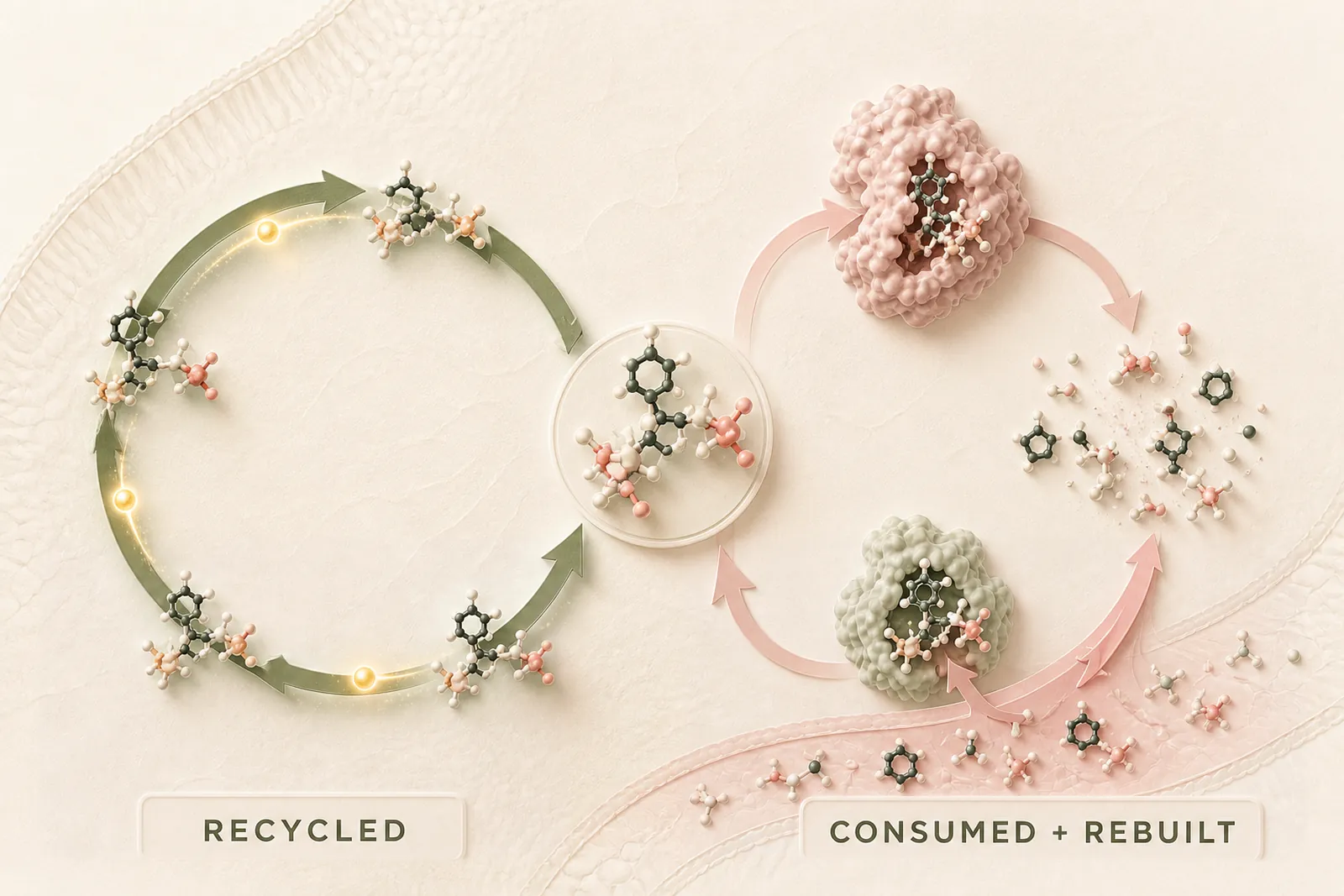
The first job is carrying electrons. NAD+ cycles between its oxidised form and its reduced form, NADH, shuttling electrons through glycolysis, the citric acid cycle and oxidative phosphorylation. In this role NAD+ is not consumed. It is recycled continuously, thousands of times, like a courier that never retires.
The second job is entirely different. NAD+ is also a substrate, meaning certain enzymes break it apart to function. Sirtuins use it to remove chemical tags from proteins. PARP enzymes use it during DNA repair. CD38 consumes it as part of immune signalling. These enzymes destroy NAD+ in the act of working, which means the cell must continually manufacture replacements. That second job is where the ageing conversation lives.
Keeping the two apart matters more than it sounds. The recycling role moves an enormous amount of NAD+ through the cell every second without ever depleting it, so a headline about how much NAD+ your metabolism "uses" is usually describing traffic, not consumption. Only the second role draws the pool down. When marketing copy blends the two, it borrows the scale of the first job to make the depletion story in the second sound larger than the evidence supports.

Why do NAD+ levels fall with age?
Because consumption rises while production does not keep pace. CD38 activity increases with age, and PARP demand increases as accumulated DNA damage requires more repair. Both draw on the same finite pool.
Cells replenish NAD+ mainly through the salvage pathway, which recycles nicotinamide back into NAD+ via NAMPT, the rate-limiting enzyme in that route. When demand climbs and salvage capacity does not, the pool falls. Declining tissue NAD+ has been observed with age across multiple tissues and multiple species, and that observation is genuinely well supported. It is the most solid part of the entire NAD+ story.
Two qualifications sit underneath it, and both matter to anyone designing work in this area. The decline is not uniform: different tissues report different magnitudes, and a figure taken from liver does not describe muscle or brain. And most human data is not tissue data at all — it comes from blood, usually from peripheral blood mononuclear cells, because that is what can be sampled repeatedly without a biopsy. Blood is a proxy. Whether it tracks what is happening inside the tissues that anyone actually cares about is an open question rather than a settled one, and it is the single assumption most quietly carried through the NAD+ literature.
What is the difference between NAD+, NMN and NR?
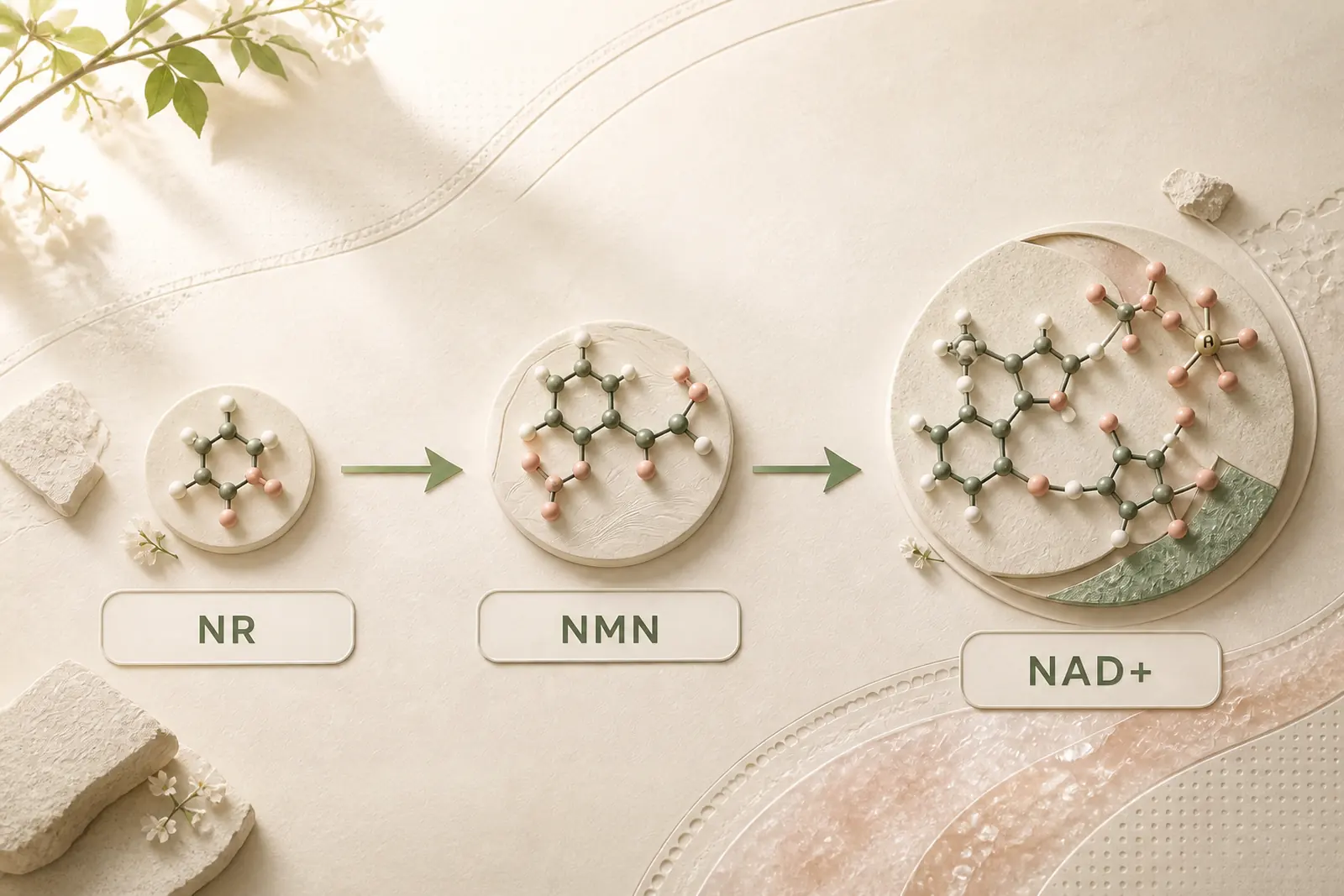
NAD+, NMN and NR are three points on the same pathway, not three versions of the same product. NAD+ is the destination. NMN (nicotinamide mononucleotide) and NR (nicotinamide riboside) are precursors — smaller molecules the cell converts on the way there.
The route runs in one direction. NR is phosphorylated into NMN by nicotinamide riboside kinases; NMN is then adenylylated into NAD+ by NMNAT enzymes. So NR sits one step further back than NMN, and NMN sits one step behind NAD+ itself.
The reason precursors, rather than NAD+, dominate the consumer market is a claim about getting the molecule where it needs to be. NAD+ is comparatively large and carries charge, and the long-standing assumption has been that it does not cross intact cell membranes readily, making it more efficient to supply something smaller and let the cell finish the job. That assumption is not as firm as it is usually presented — proposed transport mechanisms for NMN have been reported and then contested in the literature, and the question of how any of these molecules actually reach the intracellular pool remains genuinely unresolved.
What follows for research is narrow and useful: the three are not interchangeable, and results do not transfer between them. A study on NR does not tell you about NMN, and a study on either does not tell you about NAD+ supplied directly. What most trials share is the endpoint they measure — blood NAD+ — which is part of why studies on different compounds produce similar-looking headline numbers and dissimilar-looking outcomes underneath them. The comparison question people usually want answered, which of the three works better, does not currently have a settled answer.
Is the anti-ageing claim actually supported?
This is where honesty matters more than enthusiasm, because the popular version of the NAD+ story quietly performs a leap that the evidence does not.
The observation is that NAD+ declines with age. The claim is that restoring NAD+ reverses the things that decline alongside it. Those are different statements, and the second does not follow from the first. Correlation with ageing does not establish that the molecule is driving ageing rather than responding to it.
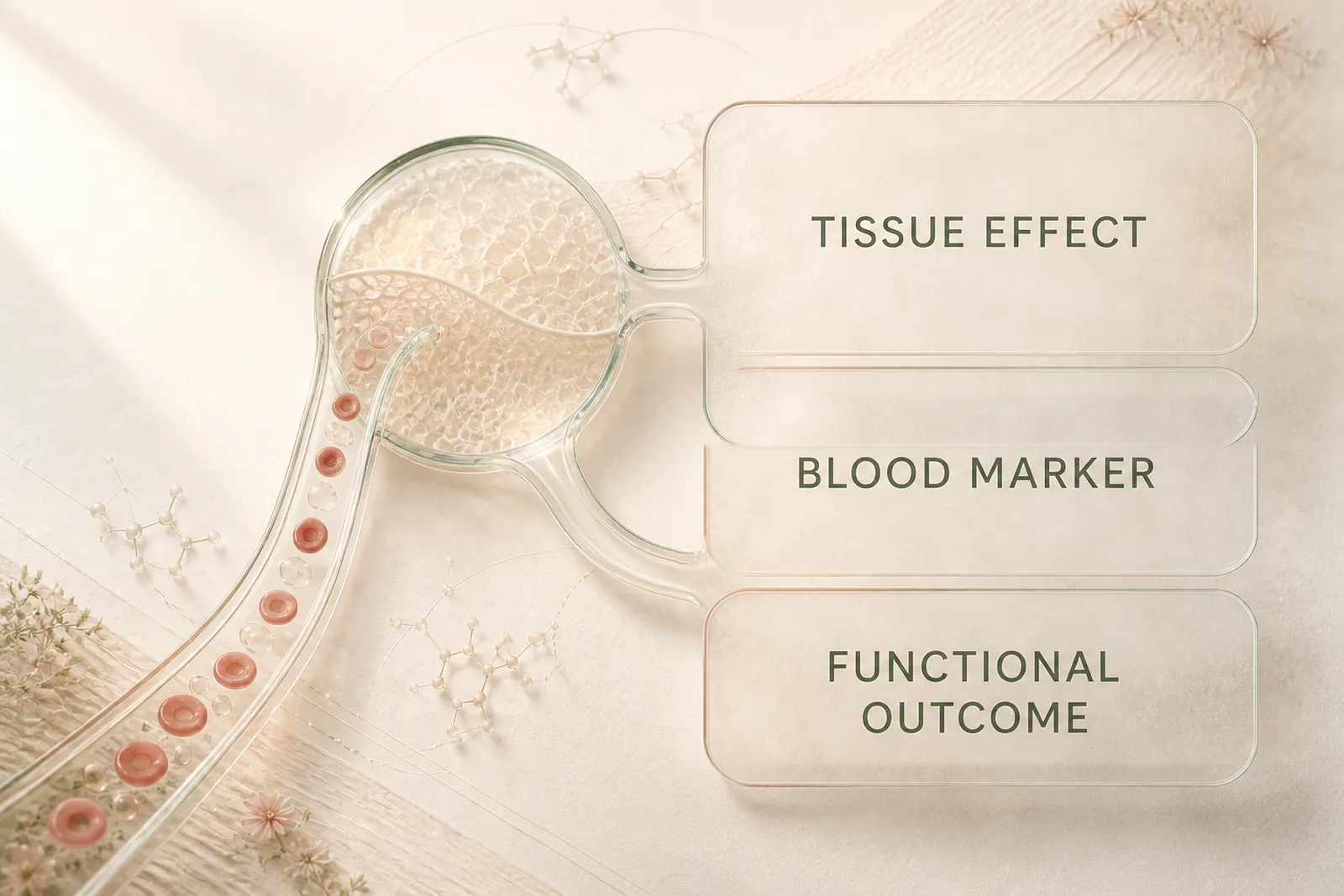
Human trials of NAD+ precursors reliably show one thing: blood NAD+ goes up. That result is replicated and not in dispute. What those trials have largely not shown is a corresponding clinical benefit. Most are small, short, and measure blood concentration rather than tissue concentration or any functional outcome. Animal work is more encouraging, but animal work has been more encouraging than human results across most of longevity science.
The gap between those two findings is the whole argument, and it is worth naming precisely rather than gesturing at. Demonstrating that a precursor raises a blood marker demonstrates that the compound was absorbed and metabolised. It does not demonstrate that the marker matters. Until a trial shows a functional endpoint moving — something measured in what a person or an animal can do, not in what their plasma contains — the honest description of the field is that the delivery problem looks solved and the effect question remains open.
What does NAD+ actually arrive as?
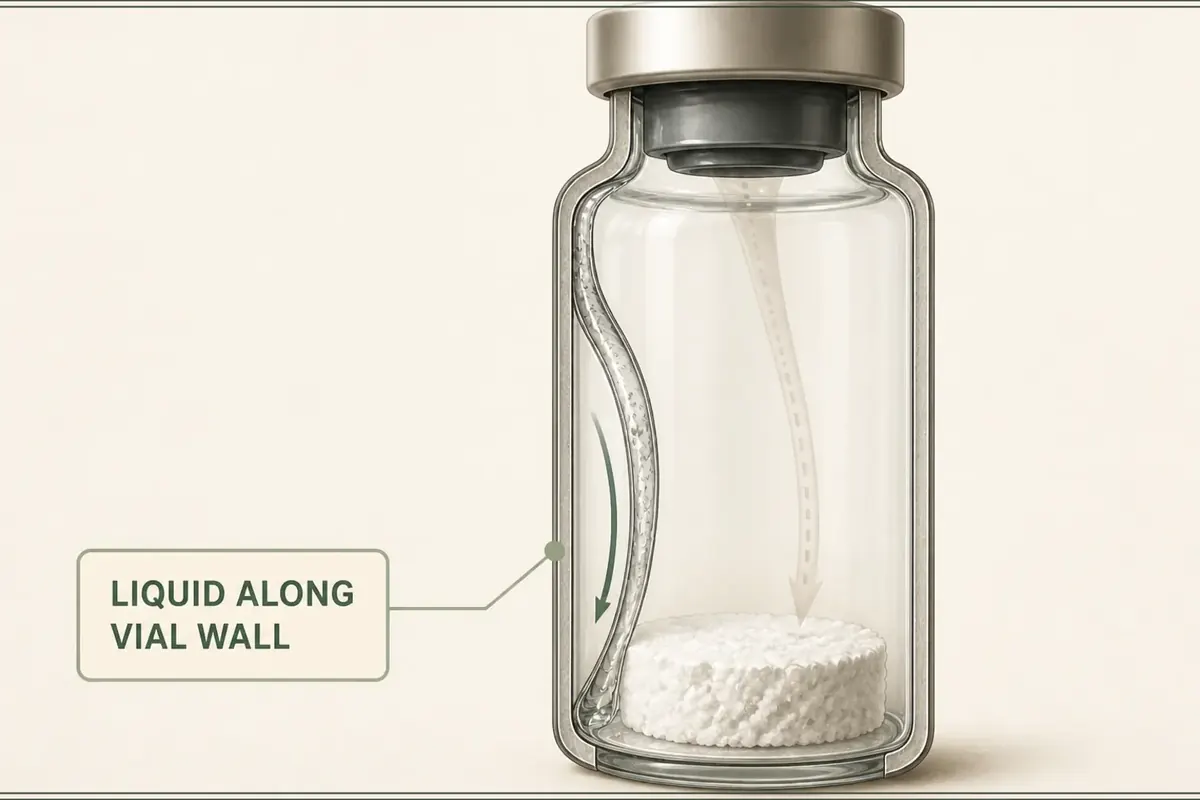
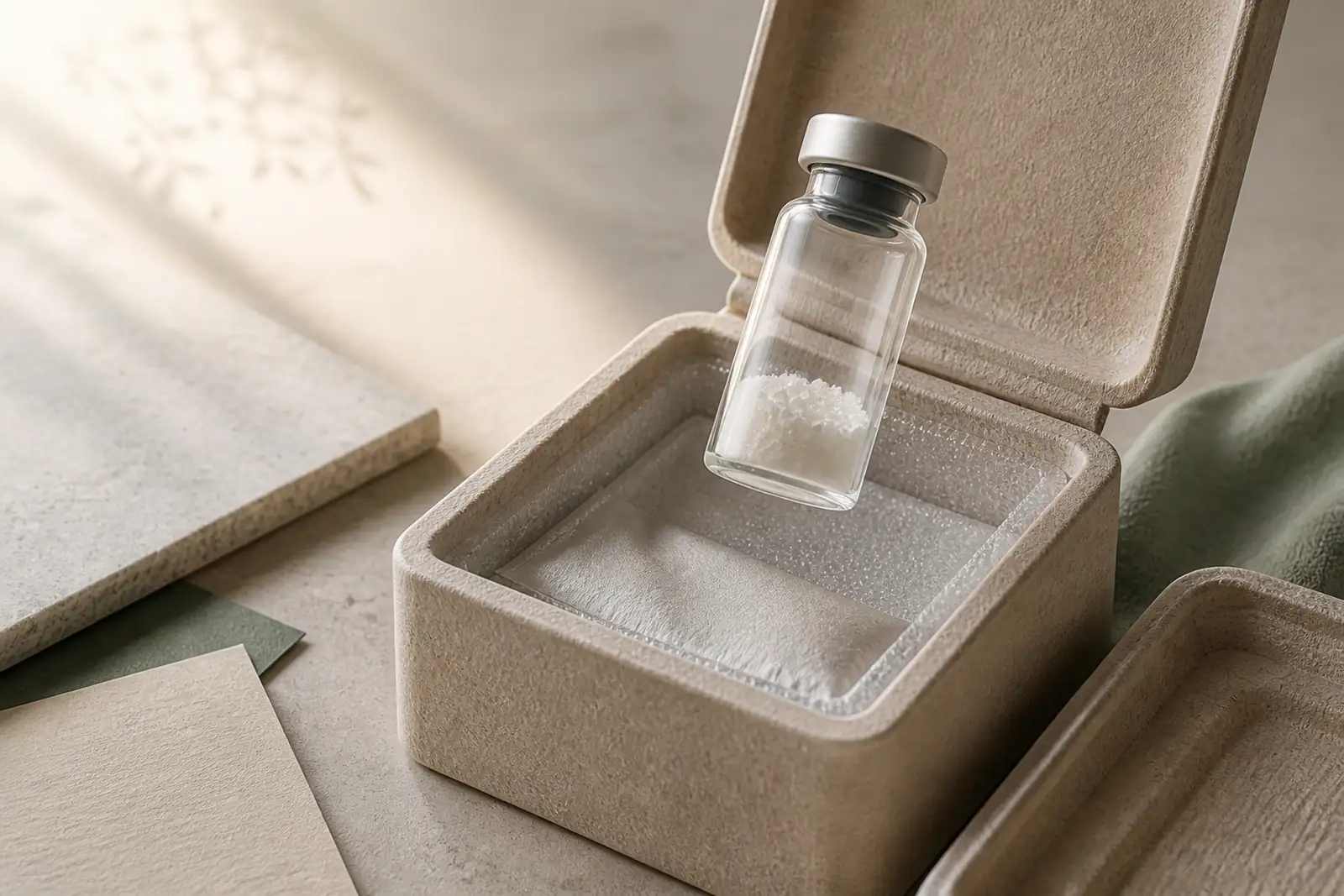
As a lyophilised powder in a sealed vial — freeze-dried, white to off-white, and not a ready-made solution. Everything about how it is handled follows from that one fact.
NAD+ is unstable in water. It hydrolyses over time, and the rate climbs with temperature and with pH moving away from neutral, which is why material that sits in solution has a considerably shorter honest shelf life than material that does not. Lyophilisation removes the water and effectively stops the clock, and cold-chain storage keeps it stopped. A supplier shipping a pre-made NAD+ solution is making a stability claim, and it is fair to ask them to support it.
Two details on the label are worth checking before you buy, because both are routinely blurred. The first is oxidation state: NAD+ and NADH are different compounds that behave differently, and a label reading only "NAD" has not told you which one is in the vial. The second is the form supplied — NAD+ is sold both as the free acid and as the disodium salt, and the two differ in mass for the same nominal quantity. A certificate stating the salt form and the basis of the assay settles it; one that stops at the compound name leaves you to guess at exactly the point where guessing costs you accuracy.
What does that mean if you work with NAD+?
It means the interesting questions are still open, which is precisely why NAD+ remains an active research subject rather than a settled one. Tissue-level effects, the relationship between blood and intracellular concentration, and whether raising the pool changes anything downstream are all live areas.
It also means the design of the work carries more weight than usual. Where an effect is small and the literature is unsettled, the variables that get treated as background — which compound was used, what form it arrived in, whether it had degraded before it was ever measured, whether the endpoint was blood or tissue — stop being background and start being the result. Material identity is one of those variables, and it is the one most often assumed rather than verified.
It also means anyone selling certainty is selling something the literature does not contain. We would rather state that plainly than imply otherwise, because the researchers who work with this material already know it, and pretending otherwise would only signal that we do not.
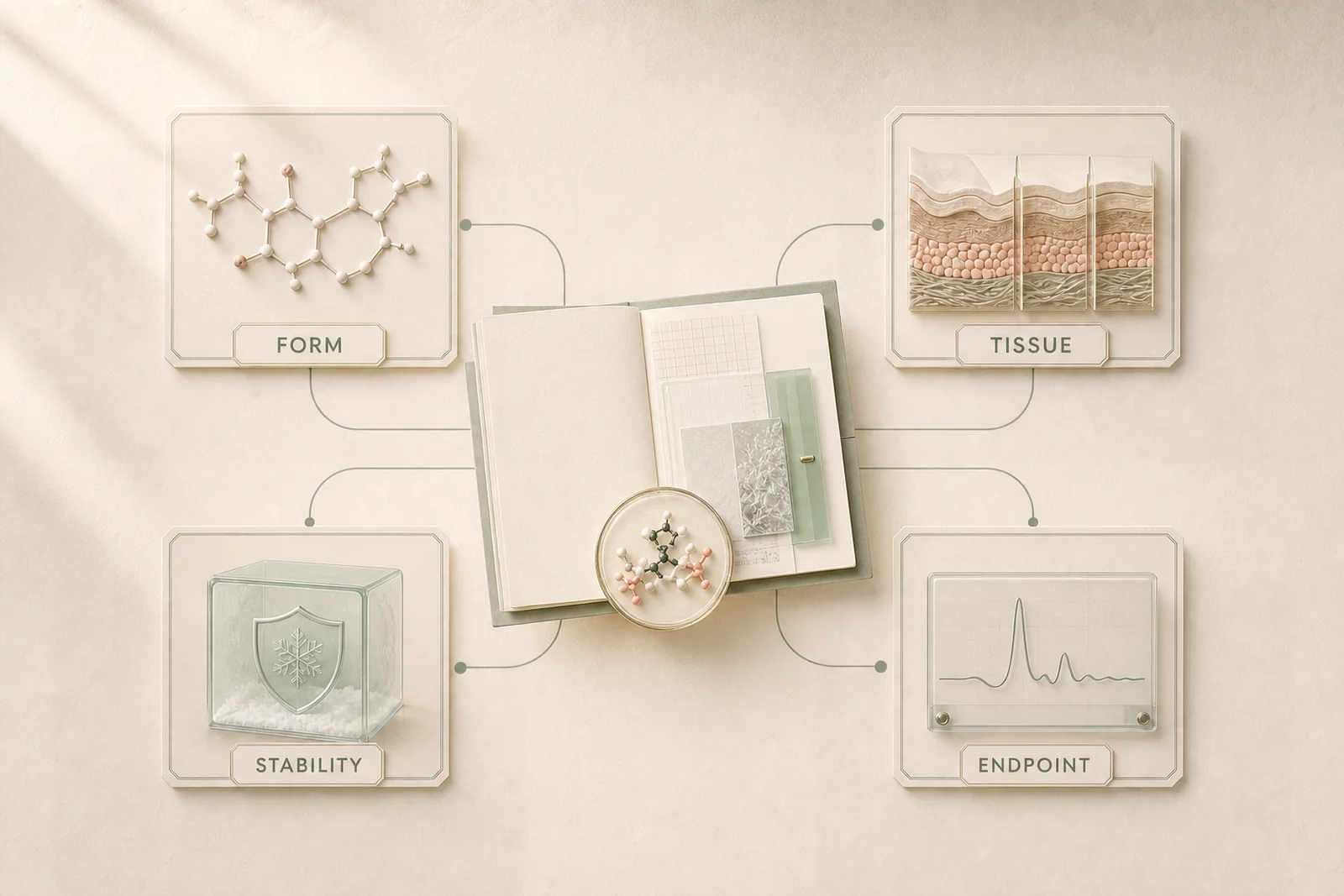
Working with NAD+ as a research material
We supply NAD+ as a lyophilised research material with per-lot certificates of analysis, HPLC purity data and mass-spectrometry identity confirmation, shipped under stated cold-chain conditions.
That includes the label details above. Our certificates name the oxidation state and the form supplied rather than leaving "NAD" to stand for either, and the cold-chain conditions are published before purchase rather than discovered after it. None of that makes the underlying science more settled than it is — it removes one variable from work where the remaining variables are already difficult enough. Supplied for laboratory research use only.
If you are comparing suppliers, the useful test is the one this article has already described: ask which form and which oxidation state, ask for the per-lot analysis rather than a generic specification sheet, and ask what the cold-chain conditions actually are. We would rather be measured against that than against a claim about what NAD+ does.
If you are sourcing material for NAD+ work, you can see our NAD+ 500mg research material, and it is worth reading what the evidence says about raising NAD+ levels before deciding on an approach.
For research use only — not for human consumption. Nothing here is medical advice.