
Lab Team
Raising blood NAD+, raising tissue NAD+ and producing a benefit are three different claims. Here is which of them the human evidence currently supports.
Most guidance on raising NAD+ blurs three separate claims into one, and separating them is the fastest way to work out what is worth your money. Raising NAD+ in blood, raising it inside tissues, and producing a measurable benefit are three different achievements with three different levels of evidential support. Only the first is well established in humans.

Why can NAD+ not simply be taken directly?
Because the molecule is poorly absorbed intact. NAD+ is large and carries charge, and molecules with those properties cross cell membranes badly. Taken orally it is substantially broken down before reaching circulation, and what survives struggles to enter cells.
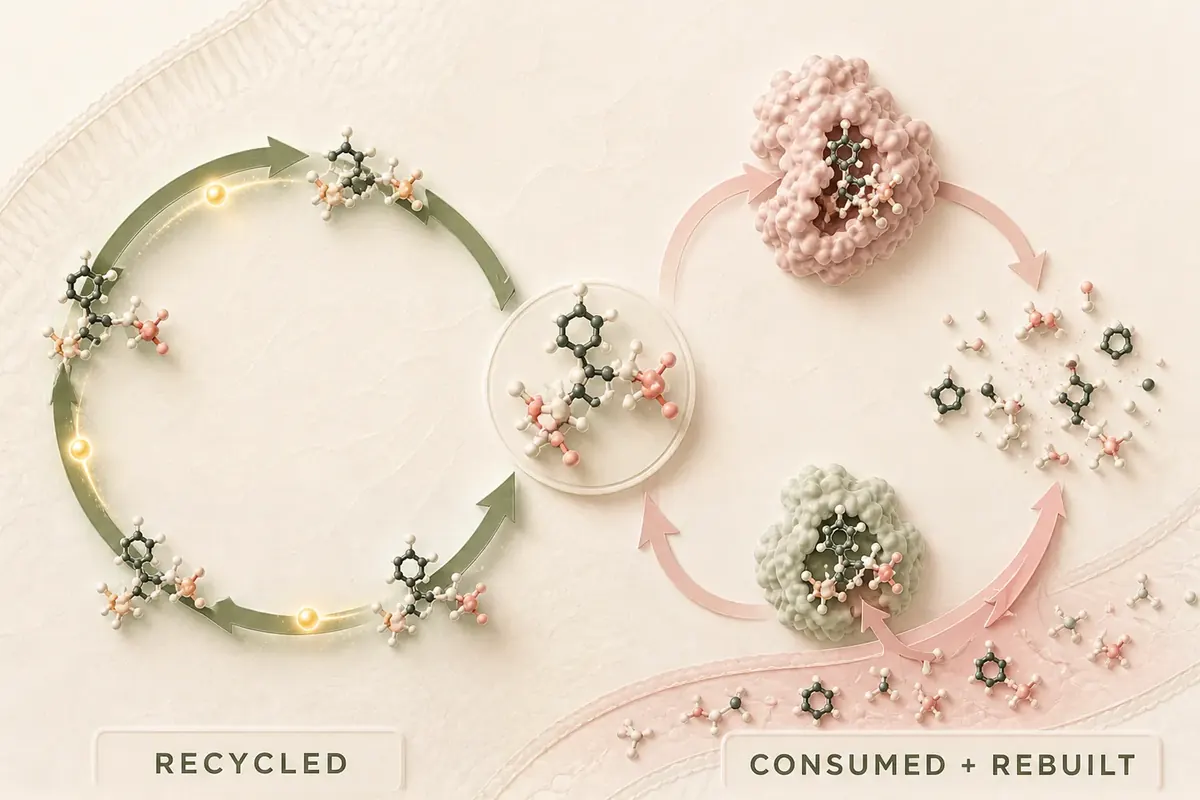
This is why the field works with precursors rather than NAD+ itself. Precursors are smaller molecules that cells convert into NAD+ through the salvage pathway once they are inside. Nicotinamide riboside and nicotinamide mononucleotide are the two most studied, and both are routinely converted by the enzymatic machinery cells already possess.
It is also why injectable and intravenous routes exist at all. Bypassing the gut removes the absorption problem, though it does not remove the question of what happens once the molecule is in circulation.
That second question is the one the field keeps returning to. Getting a molecule into the bloodstream and getting it into a cell are separate problems with separate solutions, and solving the first says very little about the second. A precursor strategy is really a bet that the cell's own conversion machinery is a better delivery system than any route of administration — which is a reasonable bet, and still a bet.
Do precursors reliably raise NAD+?
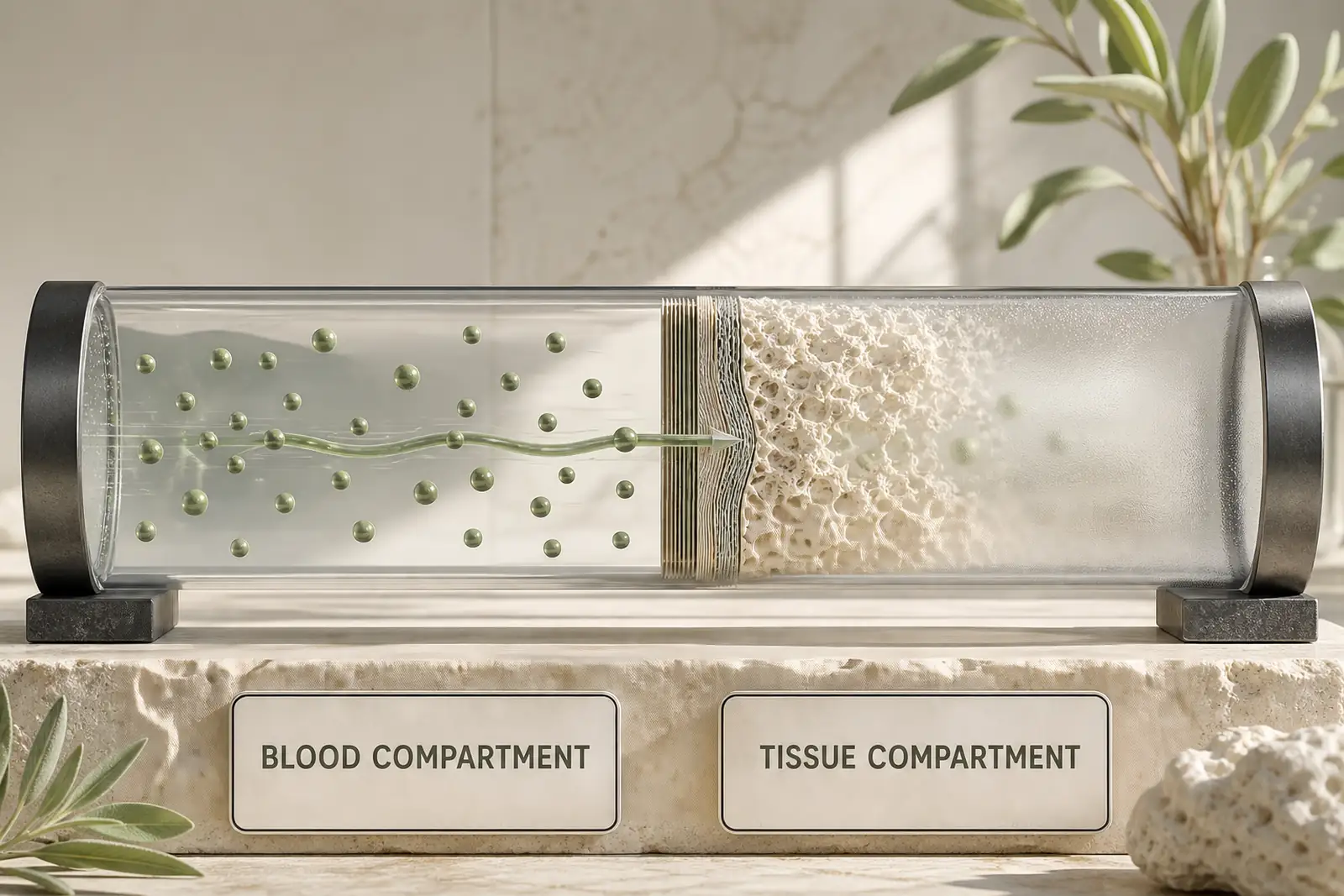
In blood, yes. This is the best supported finding in the entire area, and it has been replicated across multiple human trials with both nicotinamide riboside and nicotinamide mononucleotide. Supplementation raises circulating NAD+ and related metabolites in a dose-responsive way. That result is not seriously disputed.
In tissue, the picture is considerably weaker. Measuring intracellular NAD+ in a living human requires either a biopsy or specialised imaging, so most trials do not attempt it. Where it has been measured, results have been less consistently shown than the blood data, and muscle in particular has produced mixed findings.
The gap between those two answers is the most important thing on this page. Blood concentration is a convenient proxy that may or may not reflect what is happening inside the cells where NAD+ does its work, and treating the convenient measurement as though it were the meaningful one is the central weakness of most NAD+ marketing.
Why do precursor studies disagree with each other?
Largely because they are not asking the same question. Four design choices vary across the literature, and any one of them is enough on its own to flip a result.
The compound differs. Nicotinamide riboside and nicotinamide mononucleotide enter the pathway at different points, so a null finding for one is not a null finding for the other, and the two are frequently discussed as though they were interchangeable evidence for the same proposition.
The population differs. Trials have been run in young healthy adults, in older adults, and in groups with existing metabolic impairment. A precursor that changes nothing where the salvage pathway is already keeping up may do something where it is not, and averaging those populations together produces a number that describes none of them.
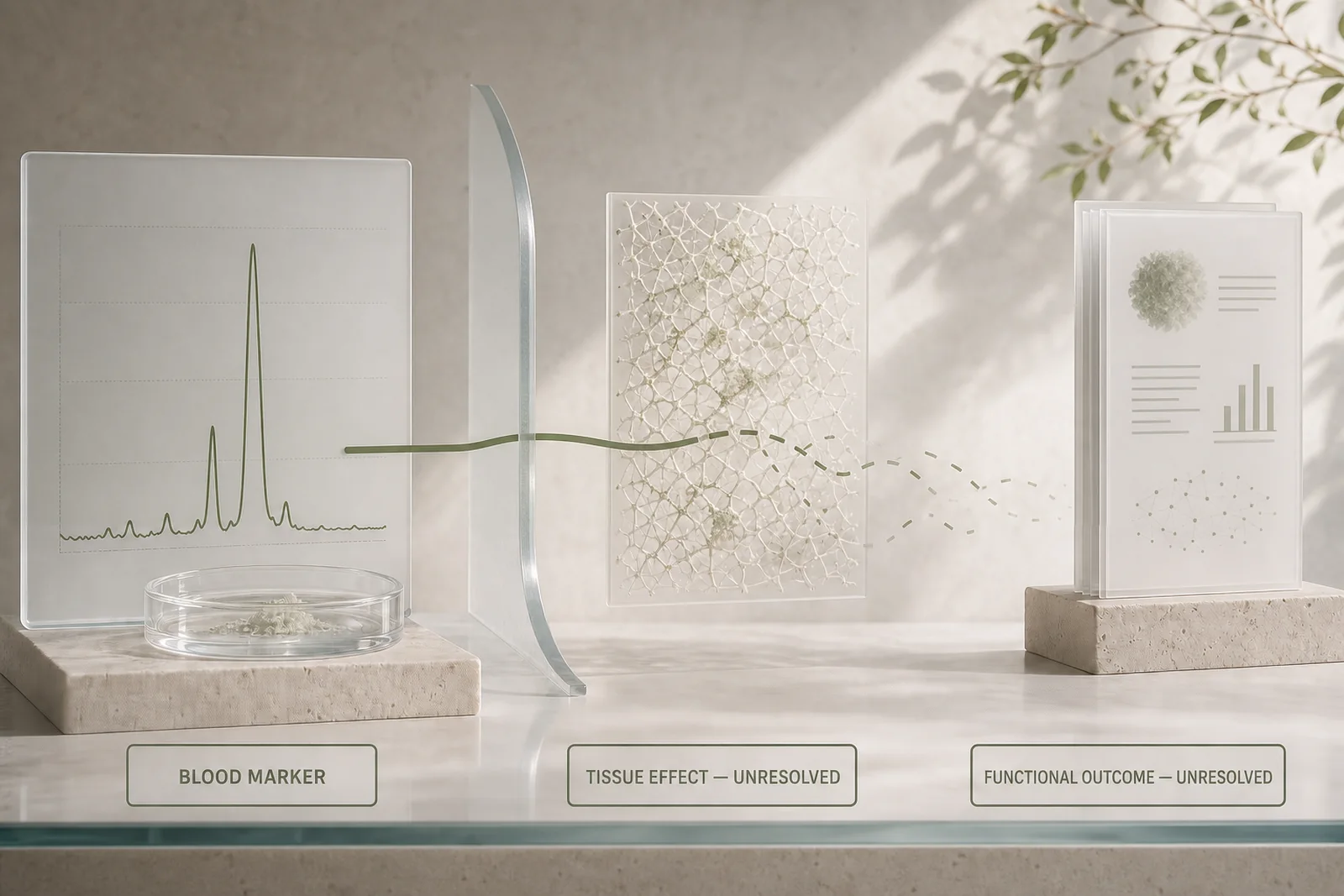
The endpoint differs, and this is where the pattern becomes informative. Studies measuring blood NAD+ report the largest and most consistent effects. Studies measuring tissue report less. Studies measuring what a person can actually do report least of all. Effect size shrinking as the endpoint moves further from the blood draw is not a coincidence to be explained away; it is the finding.
And the size and duration differ. Most trials are short and enrol few participants, which means they are underpowered to detect a modest effect. "No significant difference" and "too small a study to tell" are different statements that get written up identically, and readers rarely have the information to distinguish them.
None of this dissolves the disagreement. It relocates it: the honest reading is that the trial capable of settling the question has not yet been run, not that the answer is known and contested.
What raises NAD+ without buying anything?
Several things, and any honest account of the topic has to name them.
Exercise upregulates NAMPT, the rate-limiting enzyme of the salvage pathway, which raises the cell's own capacity to regenerate NAD+ rather than supplying more raw material. Caloric restriction and fasting states shift the NAD+ to NADH ratio and have consistent supporting evidence in animal work. Sleep matters because the salvage pathway follows circadian rhythm, and disrupted sleep disrupts it.
Reducing CD38 activity is the fourth lever and the least accessible one. CD38 rises with age and is a major consumer of NAD+, which means part of the age-related decline is a demand problem rather than a supply problem. Adding more precursor to a system with elevated consumption addresses only one side of that equation.
Two things are worth saying about this list rather than leaving them implied. The evidence behind it is mostly mechanistic and animal work — these levers are understood to act on the pathway, which is not the same as having been shown to raise tissue NAD+ in humans by a measured amount. And they are systematically under-discussed for a structural reason: nobody sells them. An account of this topic that jumps straight to what can be purchased has skipped the interventions with the least to gain from being recommended, which is worth noticing before deciding what to spend money on.



What does none of this establish?
That raising NAD+ produces a clinical benefit in humans. That step remains unproven, and it is the step every marketing claim depends on.
Human trials to date have been small, short, and built around biomarker endpoints rather than functional or clinical ones. Several have reported that NAD+ rose and that little else measurably changed. The animal literature is far more encouraging, but the history of longevity research is largely a history of animal results that did not transfer.
None of this means the hypothesis is wrong. It means it is a hypothesis under active investigation, which is a reasonable thing for it to be and an unreasonable thing to sell as settled.
The distinction is worth holding onto because both failure modes are common. Dismissing NAD+ work as fully debunked misreads a field that has produced a genuinely replicated absorption finding and a large body of suggestive animal data. Presenting it as established misreads the same field in the opposite direction. The position the evidence actually supports is narrower and less satisfying than either: the molecule does what is claimed at the level of blood chemistry, and everything beyond that remains to be demonstrated.
What makes an NAD+ material usable in research?
Three properties, and only the first is the one most listings advertise.
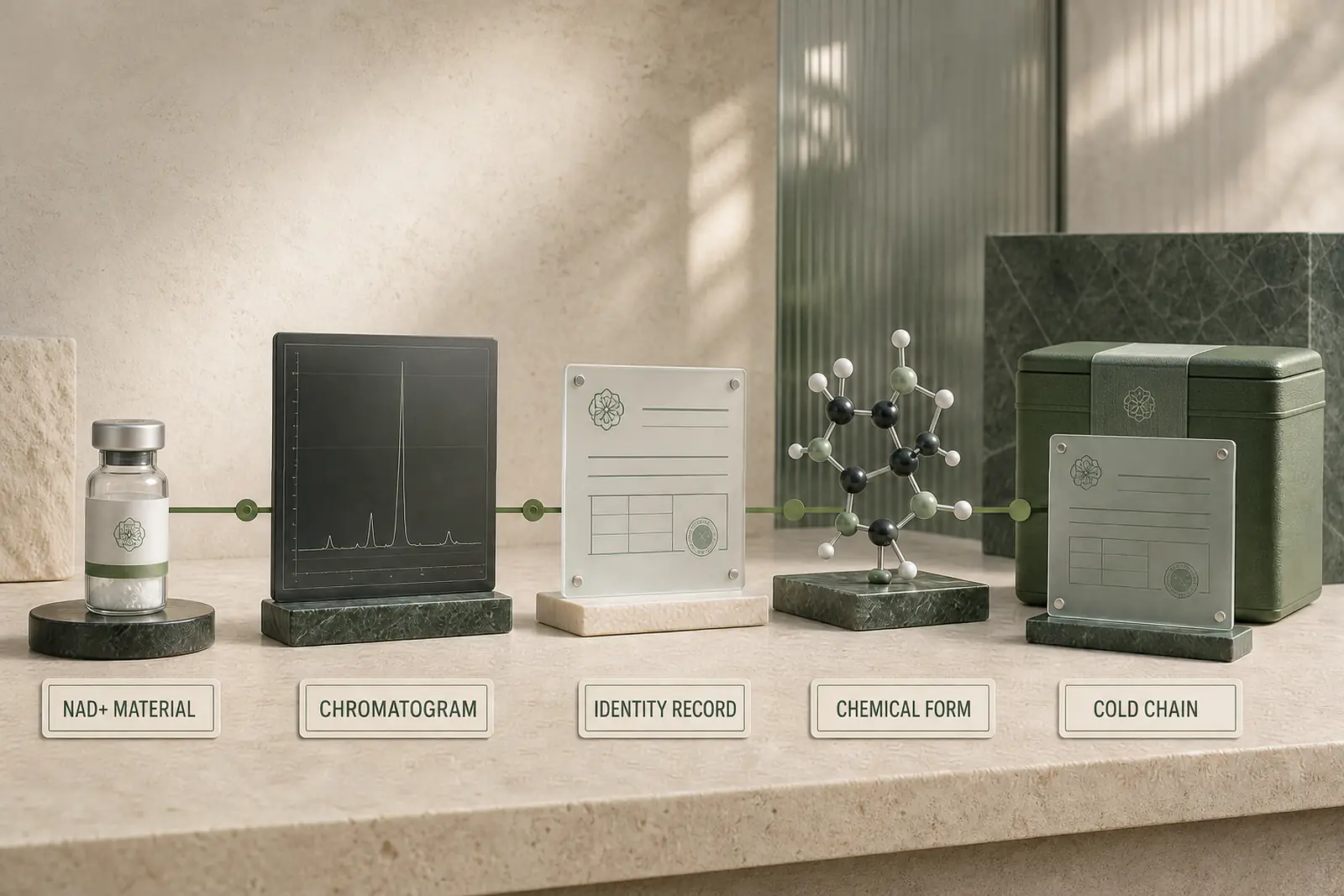
Purity stated with its method behind it. A percentage on a web page is a claim; a percentage accompanied by the chromatogram it came from is a measurement, and the difference is whether anyone outside the company can check it. The second half of that test matters as much as the first: purity is a property of a lot, not of a product. A specification sheet sets out the intended product. A certificate of analysis describes what the vial in front of you turned out to be. Suppliers who publish only the former are answering a different question from the one being asked.
Identity established separately. A purity figure counts how much of the sample is the dominant component; it never names that component. Mass-spectrometry identity confirmation is what supplies the name, and its absence from a document that reports purity to two decimal places is a conspicuous absence rather than an oversight.
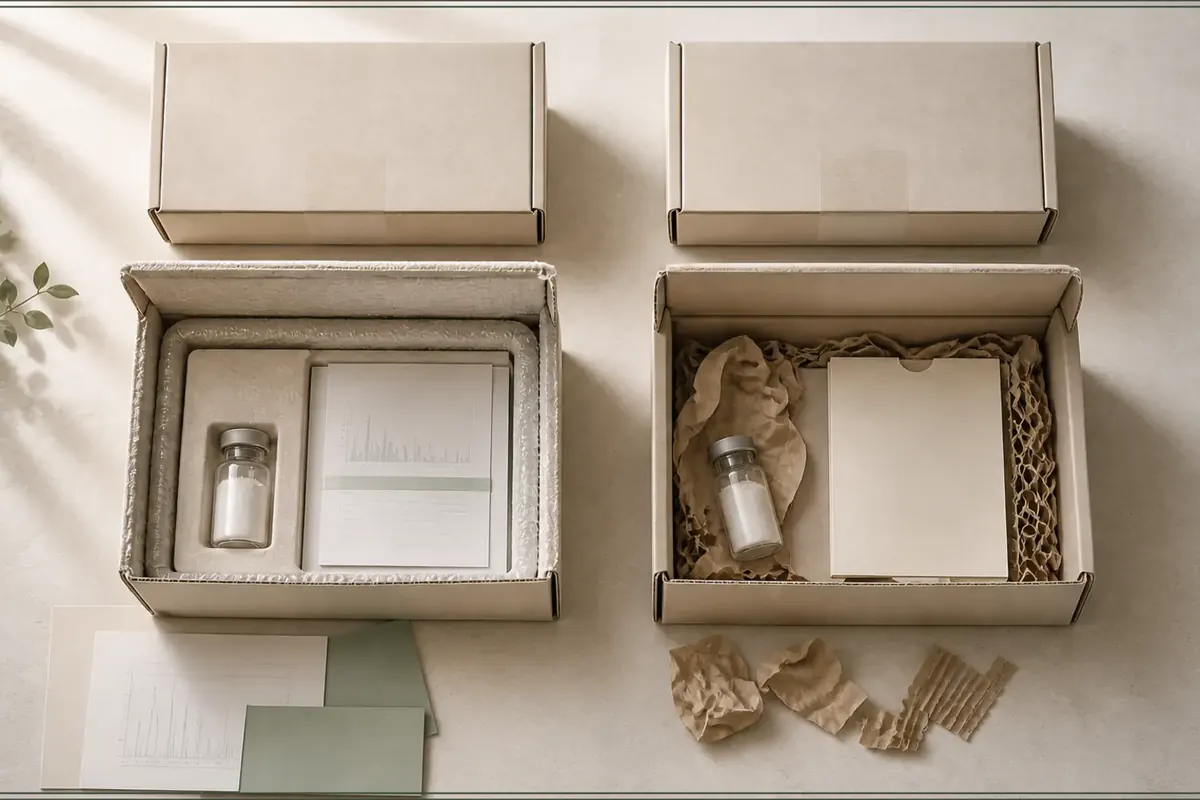
Condition on arrival, treated as part of the specification rather than as a shipping policy. Analysis is performed at the point of manufacture. What arrives is that lot plus whatever the journey did to it, and for a material this sensitive to heat those are not the same thing. Published cold-chain conditions are how a supplier makes the second half of that sentence checkable — and the checks that make any of this evidence rather than decoration are set out in what to look for in a supplier's documentation.
Material for NAD+ research
If you are running NAD+ work rather than reading about it, the constraint that matters most is whether the material is what it claims to be and arrived intact.
We supply NAD+ as a lyophilised research material with per-lot certificates of analysis, HPLC purity data and mass-spectrometry identity confirmation, shipped under stated cold-chain conditions. You can see our lyophilised NAD+ 500mg listing.
Those are the same three properties this article just described, published in the same order, and we would rather be judged against them than against any claim about what NAD+ does. Given how much of this field rests on effects small enough to be argued about, the material itself is the one variable a researcher can remove entirely before the work starts. If you have not read it yet, the mechanism behind NAD+ explains why the precursor route exists at all, and correct reconstitution technique applies to this material as much as to any other. Supplied for laboratory research use only.
For research use only — not for human consumption. Nothing here is medical advice.