Lab Team
Why temperature — and temperature cycling in particular — is the variable that most affects a research reagent's condition over time.
Peptides are large, structurally delicate molecules. Heat, light, and repeated changes of state all provide energy that can drive unwanted chemistry — aggregation, oxidation, or hydrolysis — none of which is desirable in a reagent you intend to characterise or use in an assay.
Why cycling matters more than a single spike
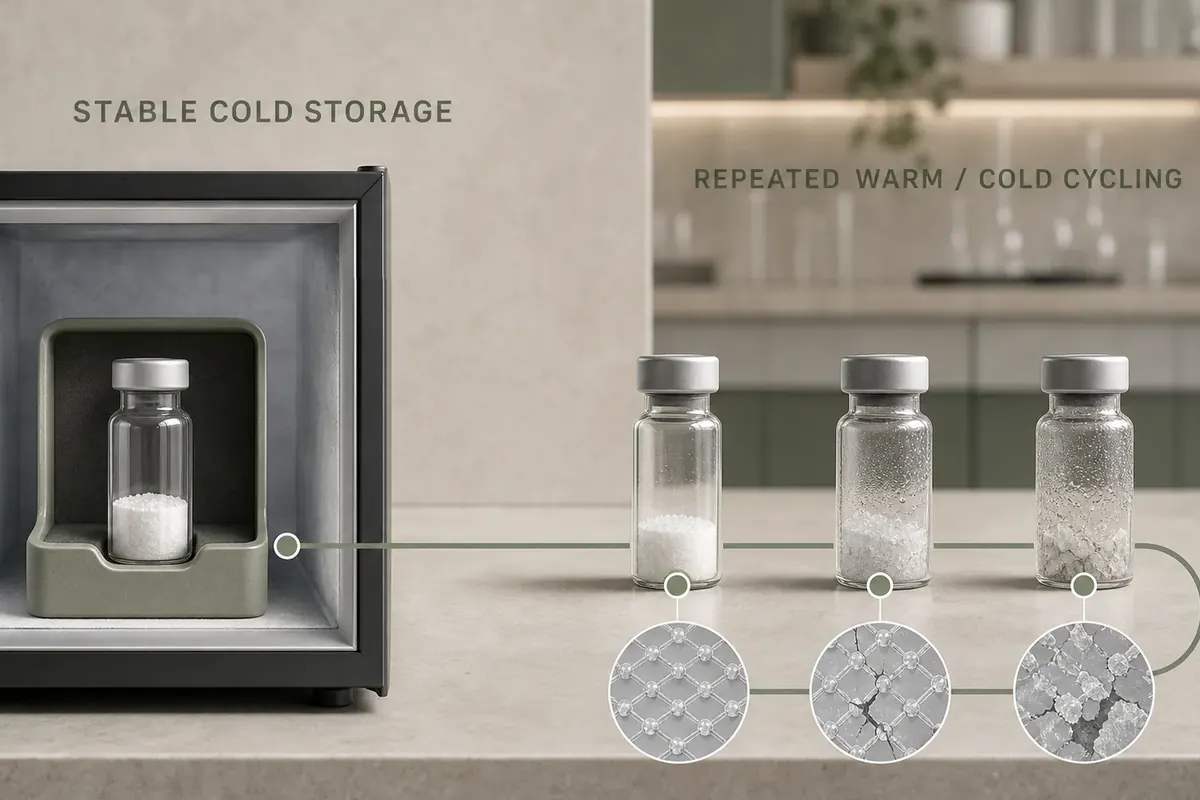
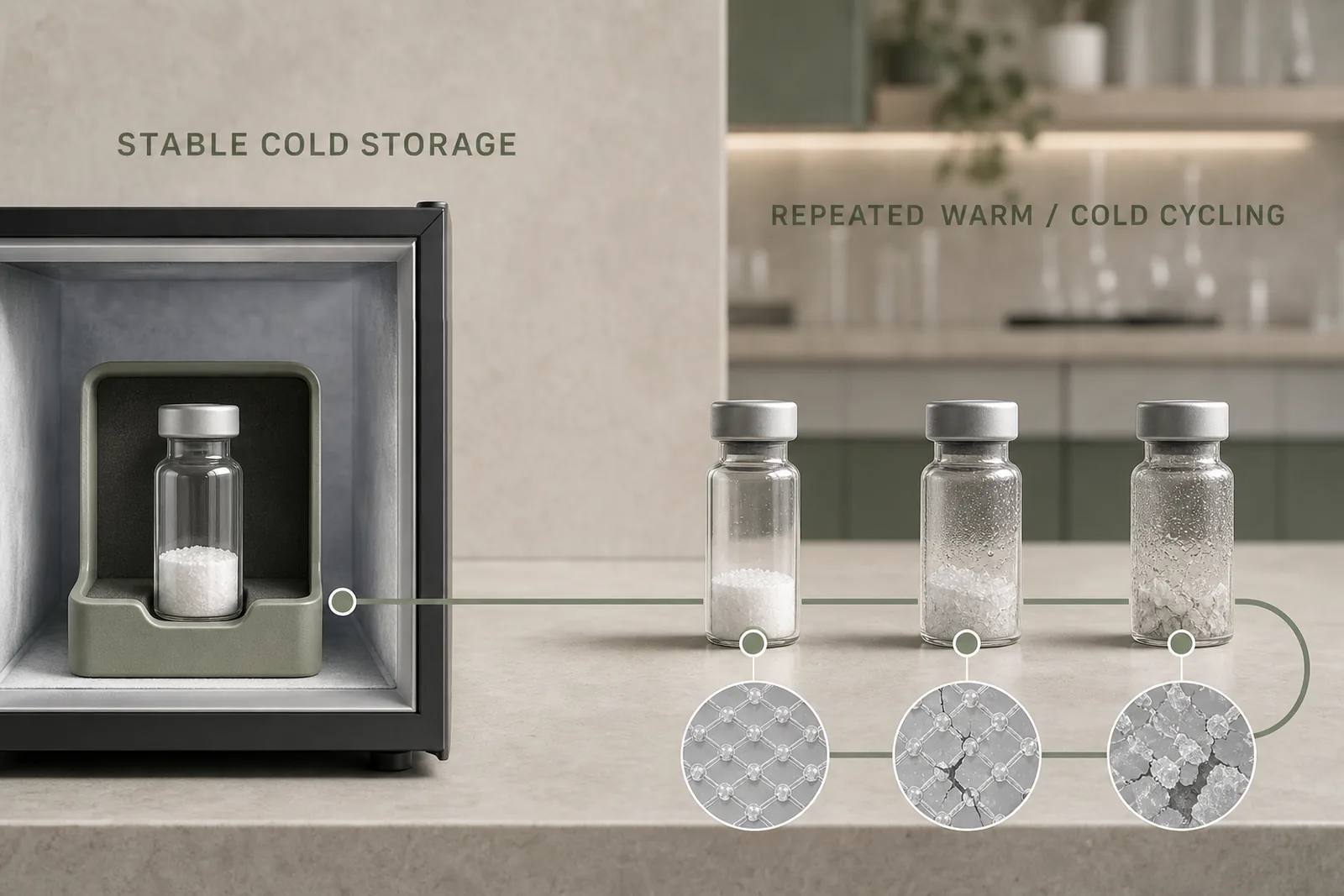
A single warm afternoon is rarely as damaging as repeated freeze–thaw or warm–cool cycling. Each transition is a small stress event; a reagent that is moved in and out of cold storage many times is generally worse off than one held at a slightly less-than-ideal but stable temperature throughout.
The general principle
Pick a storage condition your supplier documentation specifies, keep the reagent there consistently, and minimise the number of times it changes state.
Why suppliers specify conditions rather than promises
A responsible supplier tells you the storage condition a compound was characterised under and leaves the ongoing stability of your working sample to your own lab's storage discipline — because that is the variable actually under your control after the parcel arrives.
For research use only — not for human consumption. Nothing here is medical advice.