Dr. Kessler
RUO labelling is a legal and regulatory statement, not a marketing flourish — here is what it does and doesn't cover.
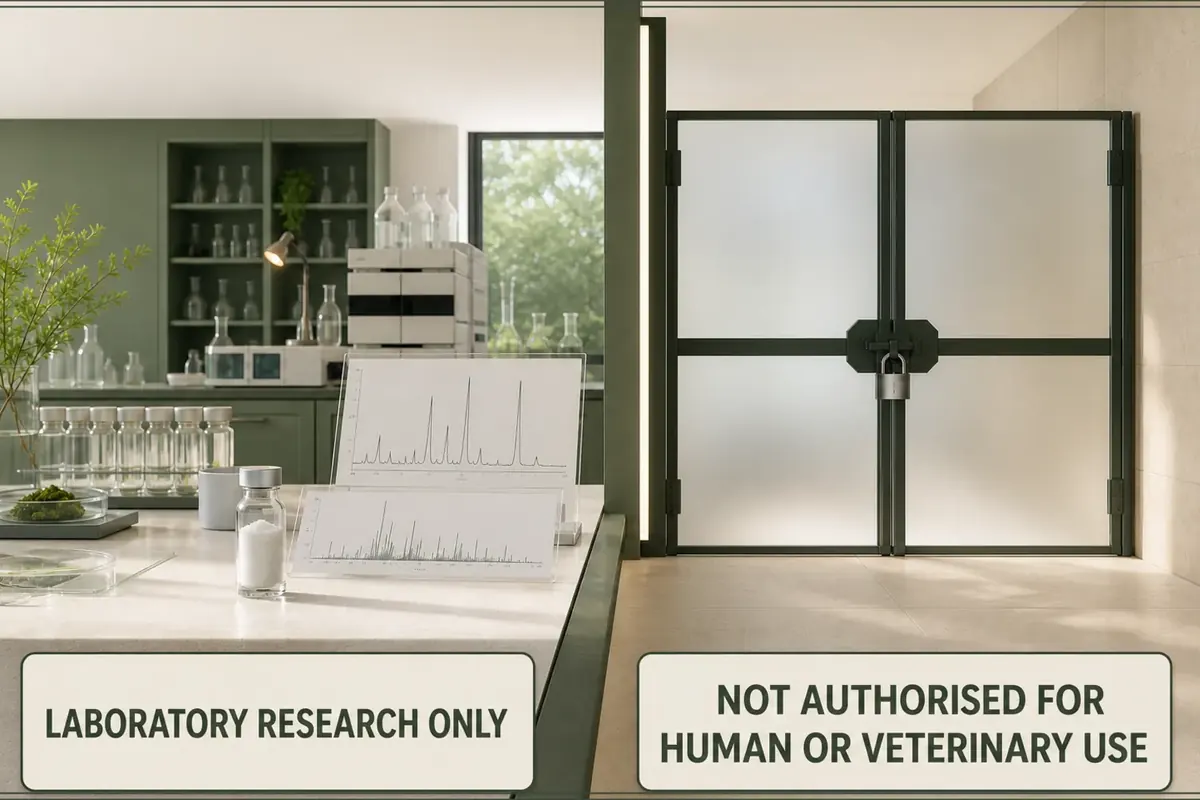
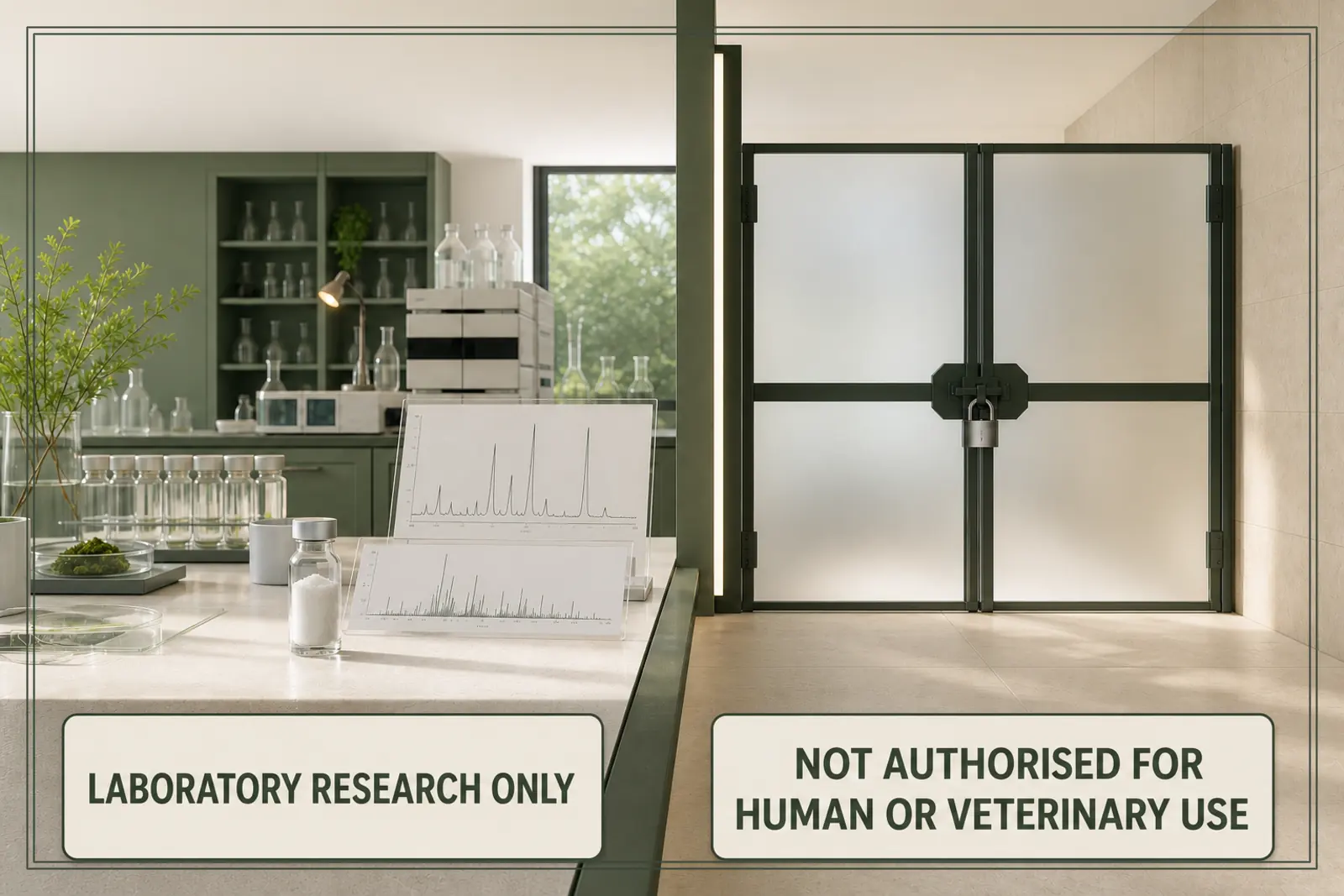
"Research use only" (RUO) is not a courtesy phrase. It is a statement that a product has not been evaluated, licensed, or authorised for use in or on humans or animals, and that it is supplied exclusively for laboratory investigation, in vitro work, or method development.
What it covers
An RUO designation tells a buyer that the supplier is not making any claim about safety, efficacy, dosing, or suitability for administration — because none of that has been established through the regulatory pathway that would be required before such a claim could lawfully be made.
What it doesn't cover
RUO labelling does not make a product legal to administer to a person or animal, and it does not substitute for the approvals that would be required to do so. A buyer who repackages, resells, or represents an RUO product for human or veterinary use is operating entirely outside the basis on which it was supplied.
In short
RUO is a boundary, not a workaround. Everything we supply stays inside it — laboratory and in-vitro research only.
For research use only — not for human consumption. Nothing here is medical advice.