Lab Team
The headline figure from retatrutide's phase 2 obesity trial is widely quoted and rarely contextualised. Here is the number with the caveats that belong beside it.
Retatrutide's phase 2 obesity trial produced one of the largest mean body-weight reductions recorded for a pharmacological agent, and that figure circulates widely with almost none of the context that determines what it means. The number does not need embellishing. It needs the four qualifications that belong beside it, because a reader who has both is far better placed than one who has only the headline.
What figure did the trial actually report?
Jastreboff and colleagues published the phase 2 results in the New England Journal of Medicine in 2023. It was a 48-week study, run in a single United States cohort of a few hundred adults whose composition is described in full in what phase 2 does and does not show. At the highest amount studied, mean body-weight reduction was approximately 24%.
That is the number. Four things qualify it, and all four are in the paper rather than being objections raised from outside it.
**It is phase 2, not phase 3.** Phase 2 trials are designed to explore effect and identify amounts worth carrying forward. Phase 3 tests those findings at scale. Effect sizes not infrequently change between the two, and retatrutide's phase 3 programme has not reported.
**It is a mean.** Behind it sits a distribution with real spread. The mean is the arithmetic centre of many different results, not a typical individual outcome, and no published data indicates where any particular person would fall within it.
**Lifestyle intervention ran alongside.** Participants received structured dietary and activity support throughout. The figure describes a protocol comprising compound plus intervention, not a compound in isolation.
**Forty-eight weeks is the observation window.** The trajectory had not clearly plateaued when the study ended, which means the endpoint value is where the data stops rather than where the effect settles.

Why is the mechanism relevant to the size of the figure?
Because retatrutide engages a pathway its predecessors do not.
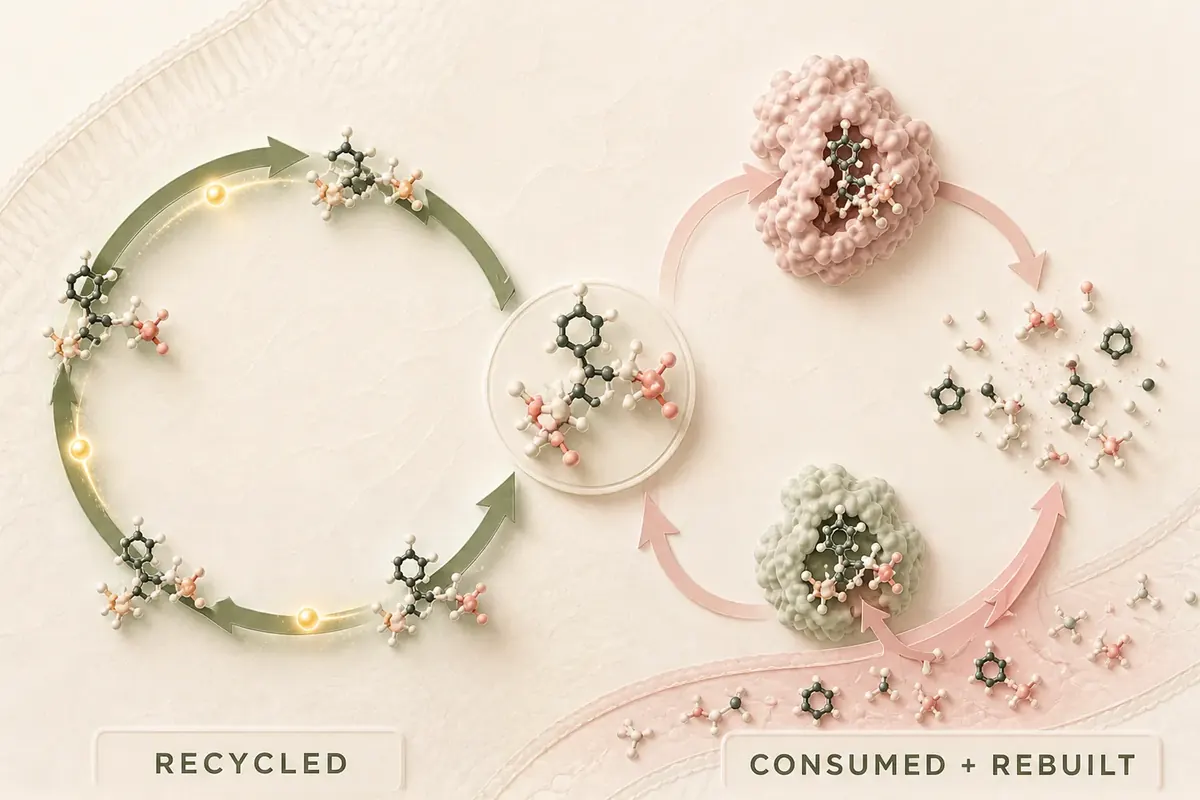
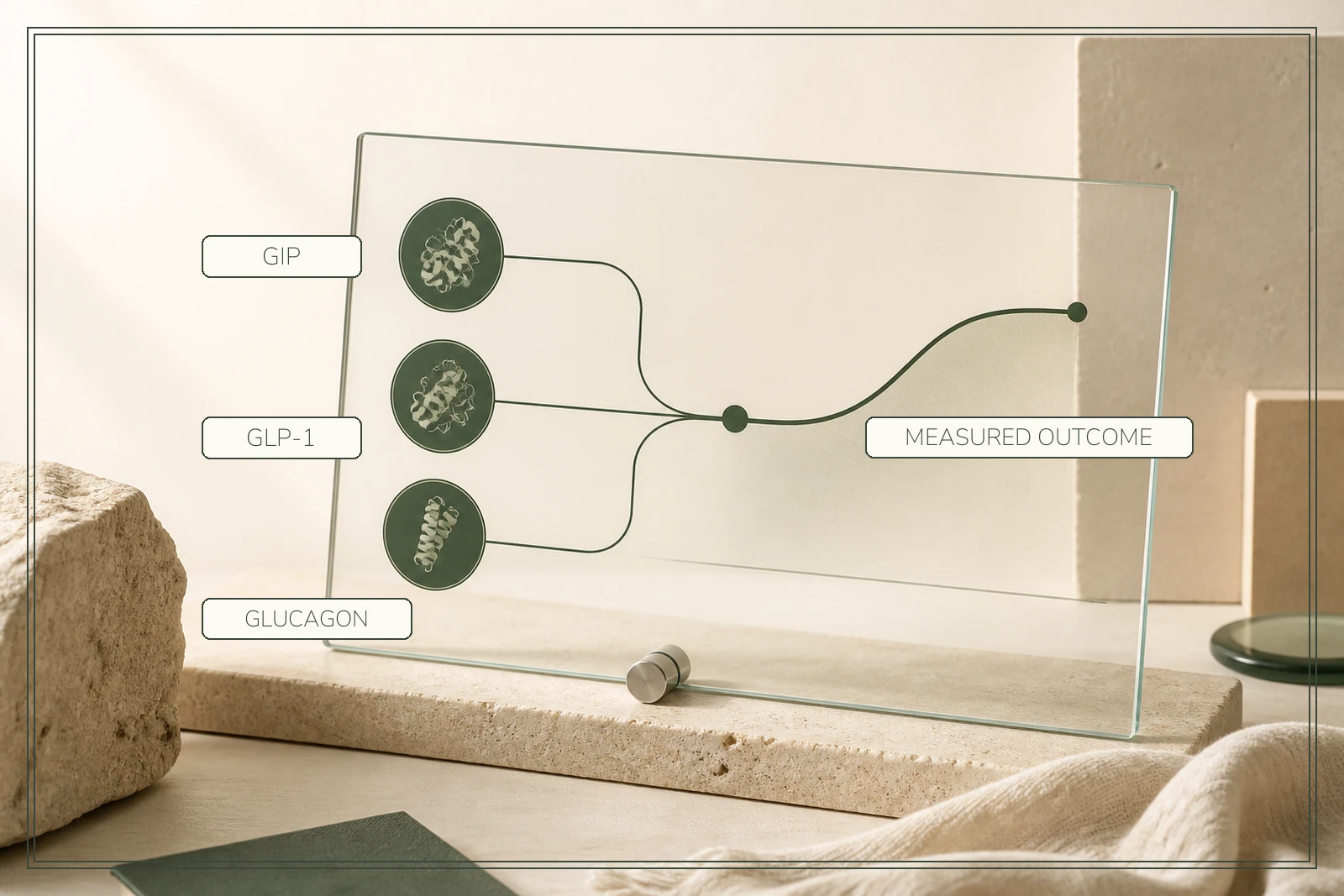
Semaglutide acts at the GLP-1 receptor. Tirzepatide adds the GIP receptor. Retatrutide adds a third, the glucagon receptor, which is associated with increased energy expenditure rather than with reduced intake alone. In principle that combines two different routes to the same endpoint.
The published work does not establish how much of the observed effect is attributable to the glucagon component specifically, because the compound was studied as a single agent rather than as separable activities. The mechanism is documented. The contribution of each part to the result is not.
There is a less comfortable implication in that, and it cuts against reading the figure as more solid than it is. A novel mechanism has less precedent behind it, not more. Where a compound works the way earlier compounds worked, a phase 2 result can be sanity-checked against a body of experience about how such results have held up at scale. A genuinely new pathway removes that check. The mechanism is a reason the finding is interesting; it is not a reason to expect the number to survive phase 3 intact.
What else did the trial measure?
More than the figure everyone quotes, and the rest of it is where a reader gets a fuller picture of what the compound was observed to do.
Alongside body weight, the trial reported on the measures that usually accompany an obesity endpoint: waist circumference, blood pressure, lipid measures and glycaemic measures. These are described as secondary endpoints, and the label matters. A trial is designed and powered around its primary endpoint; secondary measures are collected and reported honestly, but the study was not built to answer them definitively, and treating a secondary result as though it carried the same evidential weight as the primary one is a misreading the paper itself does not invite.
Retatrutide's effect on liver fat has also been examined, in work published separately from the trial described on this page. That is a different study with its own design, population and endpoints, and it should be read as its own piece of evidence rather than folded into this one. The instinct to merge everything about a compound into a single summary is exactly what strips the qualifiers off figures in the first place.
None of the secondary measures is quoted numerically here, deliberately. A number without its analysis population, its time point and its comparator is not a fact that has been simplified. It is a fact that has been removed, and the next section is about what happens when it circulates in that state.

Why do these caveats matter more than usual here?
Because the gap between the headline and the evidence is unusually wide, and because of who fills it.
A figure of that size travels well. It appears in summaries stripped of trial phase, population, duration and accompanying intervention, and each removal makes it sound more like an established property of the compound and less like the result of one 48-week study in 338 people. By the time it reaches a product listing it has often lost every qualifier it started with.
What makes the erosion hard to notice is that no single step in it looks dishonest. A summary drops the trial phase because its readers do not follow phase numbering. The next one drops the lifestyle intervention for length. A third rounds the figure. Each edit is small, defensible on its own terms, and made by someone with no intention to mislead — and the number arrives at the end of that chain looking exactly as authoritative as it did at the start, minus everything that constrained it.
Restoring them is not scepticism about the finding. The finding is real and was published in a leading journal. It is a statement about what a phase 2 result is: strong evidence that something worth investigating further is happening, and not yet a settled quantity.
Why do reported figures differ between sources?
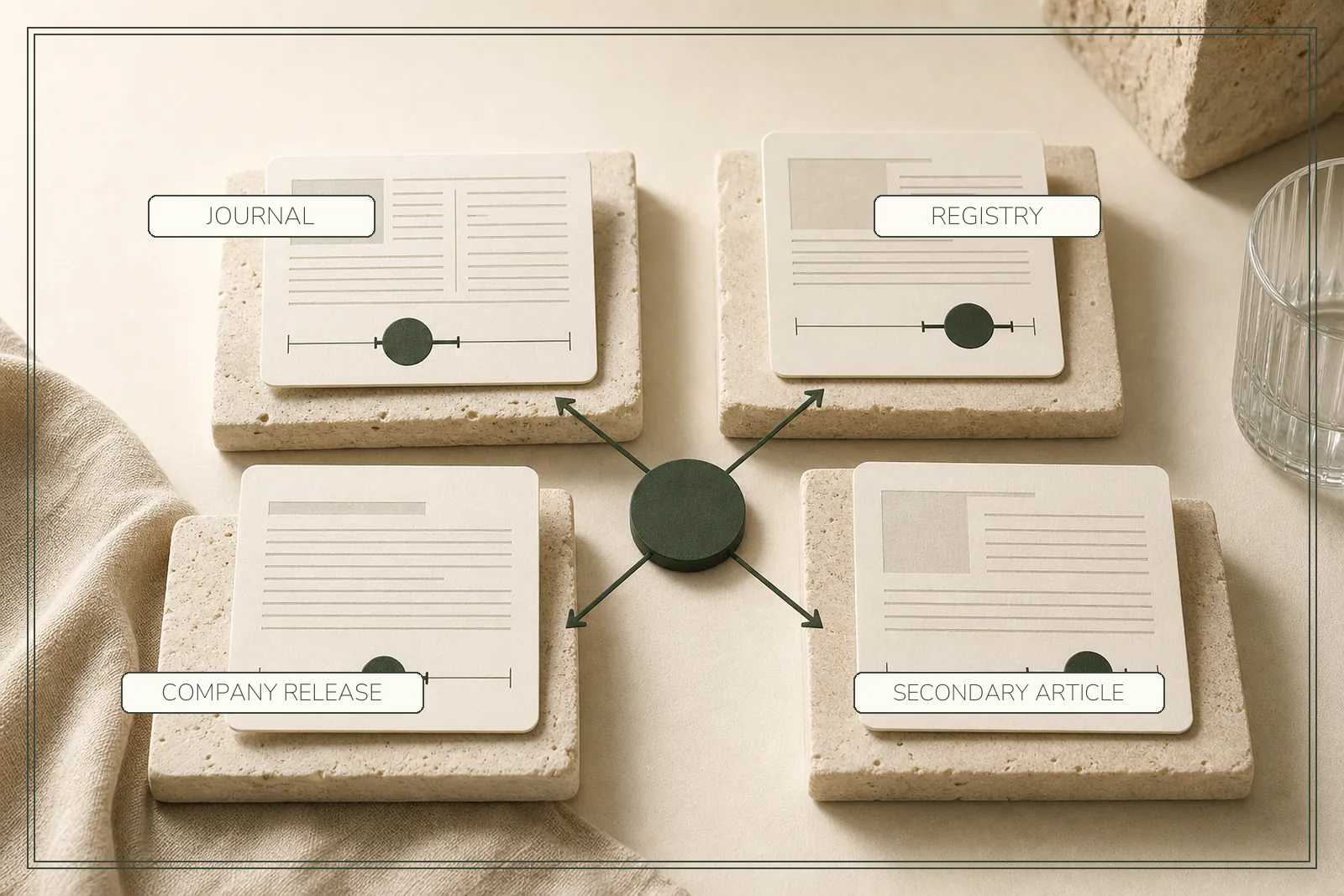
Because several different, individually correct numbers can come out of one trial, and sources rarely say which one they are quoting.
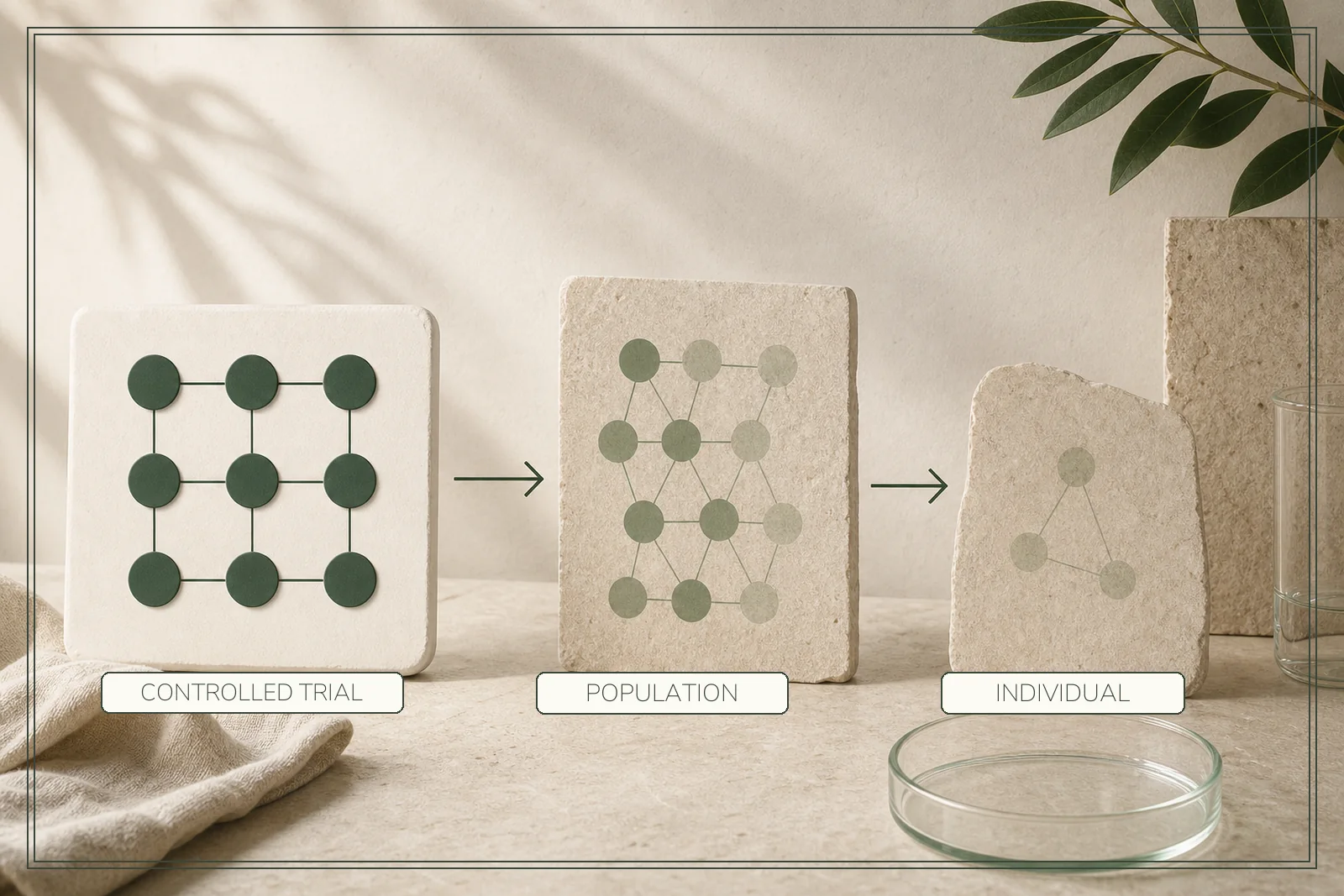
Four things move the figure. The first is which group it describes: a result at the highest amount studied is not the result across everyone in the trial, and both are legitimate ways to report the same study. The second is which analysis population was used — everyone randomised, or only those who completed — since participants who leave early are handled differently under each, and the two produce different values from identical data. The third is the time point, because a curve still moving at 48 weeks gives a different number at every earlier week. The fourth is simple rounding as the figure passes through summaries, each one tidying slightly.
Stack two or three of those and the same trial supports figures several points apart, with nobody having lied at any stage. This is why a number encountered on a forum, a number in a news summary and a number on a product listing can disagree while all three trace back to the same paper.
The practical response is not to hunt for the true figure, because more than one of them is true. It is to treat any quoted number as incomplete until it names its population, its analysis basis and its time point — and to notice that listings selling something almost always quote the largest of the available correct numbers, without the label that would tell you which one it is.
What is this material, and what is it not?
Retatrutide supplied by research chemical suppliers, including us, is not a weight-loss product and is not authorised for human use anywhere. It holds no marketing authorisation in any territory, has no approved indication and no brand name.
Everything above describes findings from a clinical trial conducted under regulated conditions with medical oversight. It describes what was observed in that study. It is not a claim about material sold for laboratory research, and nothing here should be read as suggesting our material is for human weight loss. It is not, and we do not supply it for that purpose.
The separation is worth stating in full rather than as a footer disclaimer, because the two things are genuinely different in kind. The trial studied a compound of confirmed identity and purity, manufactured to pharmaceutical standard, administered under medical supervision to a screened population with monitoring throughout. A research reagent shares the molecule and none of the rest of that description. Reading the trial result as a property of a vial imports every one of those missing conditions silently, and it is precisely the assumption a supplier quoting the headline figure is inviting you to make.

For laboratory research work
If you are sourcing retatrutide for research, the questions that determine whether your work is meaningful are about the material rather than the literature: is it the correct molecule, is it pure, and did it arrive intact.
We publish per-lot certificates of analysis with matching lot numbers, HPLC chromatograms rather than summary percentages, and mass-spectrometry identity confirmation, shipped under stated cold-chain conditions. You can see our retatrutide 20mg research material. See also how the trial curve behaves over time.
What we will not do is put the headline figure on a product page. It is a real result from a real trial and it is quoted accurately at the top of this article, in the one place where all four qualifications sit beside it. Moving it next to a price would strip every one of them off, which is the exact mechanism this article has spent its length describing — and a supplier who explains that mechanism and then uses it has told you which of the two they actually are. Supplied for laboratory research use only.
For research use only — not for human consumption. Nothing here is medical advice.